domingo, 13 de mayo de 2018

Why Do Americans Work So Much?


The economist John Maynard Keynes predicted a society so prosperous that people would hardly have to work. But that isn’t exactly how things have played out.

Lucas Jackson / Reuters
How will we all keep busy when we only have to work 15 hours a week? That was the question that worried the economist John Maynard Keynes when he wrote his short essay “Economic Possibilities for Our Grandchildren” in 1930. Over the next century, he predicted, the economy would become so productive that people would barely need to work at all.
For a while, it looked like Keynes was right: In 1930 the average workweek was 47 hours. By 1970 it had fallen to slightly less than 39.
But then something changed. Instead of continuing to decline, the duration of the workweek stayed put; it’s hovered just below 40 hours for nearly five decades.
So what happened? Why are people working just as much today as in 1970?
There would be no mystery in this if Keynes had been wrong about the economy’s increasing productivity, which he thought would lead to a standard of living “between four and eight times as high as it is today.” But Keynes got that right: Technology has made the economy massively more productive. According to Benjamin M. Friedman, an economist at Harvard, “the U.S. economy is right on track to reach Keynes’s eight-fold multiple” by 2029—100 years after the last data Keynes would have had. (Keynes did not specify what he meant by a “standard of life,” so Friedman uses per-capita output as a proxy.)
In a new paper, Friedman tries to figure out why that increased productivity has not translated into increased leisure time. Perhaps people just never feel materially satisfied, always wanting more money for the next new thing. “This argument is, at best, far from sufficient,” he writes. If that were the case, why did the duration of the workweek decline in the first place?
Another theory Friedman considers is that “in an era of ever fewer settings that provide effective opportunities for personal connections and relationships,” people may place more value on the socializing that happens at work. But the evidence for this “remains uneven at best,” and, once again, “its bearing on the abrupt change in trend in the U.S. workweek in the 1970s is far from established.”
A third possibility proves more convincing: American inequality means that the gains of increasing productivity are not widely shared. In other words, most Americans are too poor to work less. Unlike the other two explanations Friedman considers, this one fits chronologically: Inequality declined in America during the post-war period (along with the duration of the workweek), but since the early 1970s it’s risen dramatically.
Keynes’s prediction rests on the idea that “standard of life” would continue rising for everyone. But Friedman says that’s not what has happened: Although Keynes’s eight-fold figure holds up for the economy in aggregate, it’s not at all the case for the median American worker. For them, output by 2029 is likely to be around 3.5 times what it was when Keynes was writing—a bit below his four- to-eight-fold predicted range.
This can be seen in the median worker’s income over this time period, complete with a shift in 1973 that fits in precisely with when the workweek stopped shrinking. According to Friedman, “Between 1947 and 1973 the average hourly wage for nonsupervisory workers in private industries other than agriculture (restated in 2013 dollars) nearly doubled, from $12.27 to $21.23—an average growth rate of 2.1 percent per annum. But by 2013 the average hourly wage was only $20.13—a 5 percent fall from the 1973 level.” For most people, then, the magic of increasing productivity stopped working around 1973, and they had to keep working just as much in order to maintain their standard of living.
What Keynes foretold was a very optimistic version of what economists call technological unemployment—the idea that less labor will be necessary because machines can do so much. In Keynes’s vision, the resulting unemployment would be distributed more or less evenly across society in the form of increased leisure.
Friedman says that reality comports more with a darker version of technological unemployment: It’s not unemployment per se, but a soft labor market in which millions of people are “desperately seeking whatever low-wage work [they] can get.” This is corroborated by a recent poll by Marketplace that found that for half of hourly workers, their top concern isn’t that they work too much but that they work too little—not, presumably, because they like their jobs so much, but because they need the money.
This explanation leaves an important question: If the very rich—the workers who have reaped above-average gains from the increased productivity since Keynes’s time—can afford to work less, why don’t they? I asked Friedman about this and he theorized that for many top earners, work is a labor of love. They are doing work they care about and are interested in, and doing more of it isn’t such a burden—it may even be a pleasure. They derive meaning from their jobs, and it is an important part of how they think of themselves. And, of course, they are compensated for it at a level that makes it worth their while.
The prosperity Keynes predicted is here. After all, the economy as a whole has grown even more brilliantly than he expected. But for most Americans, that prosperity is nowhere to be seen—and, as a result, neither are those shorter workweeks.

sábado, 12 de mayo de 2018

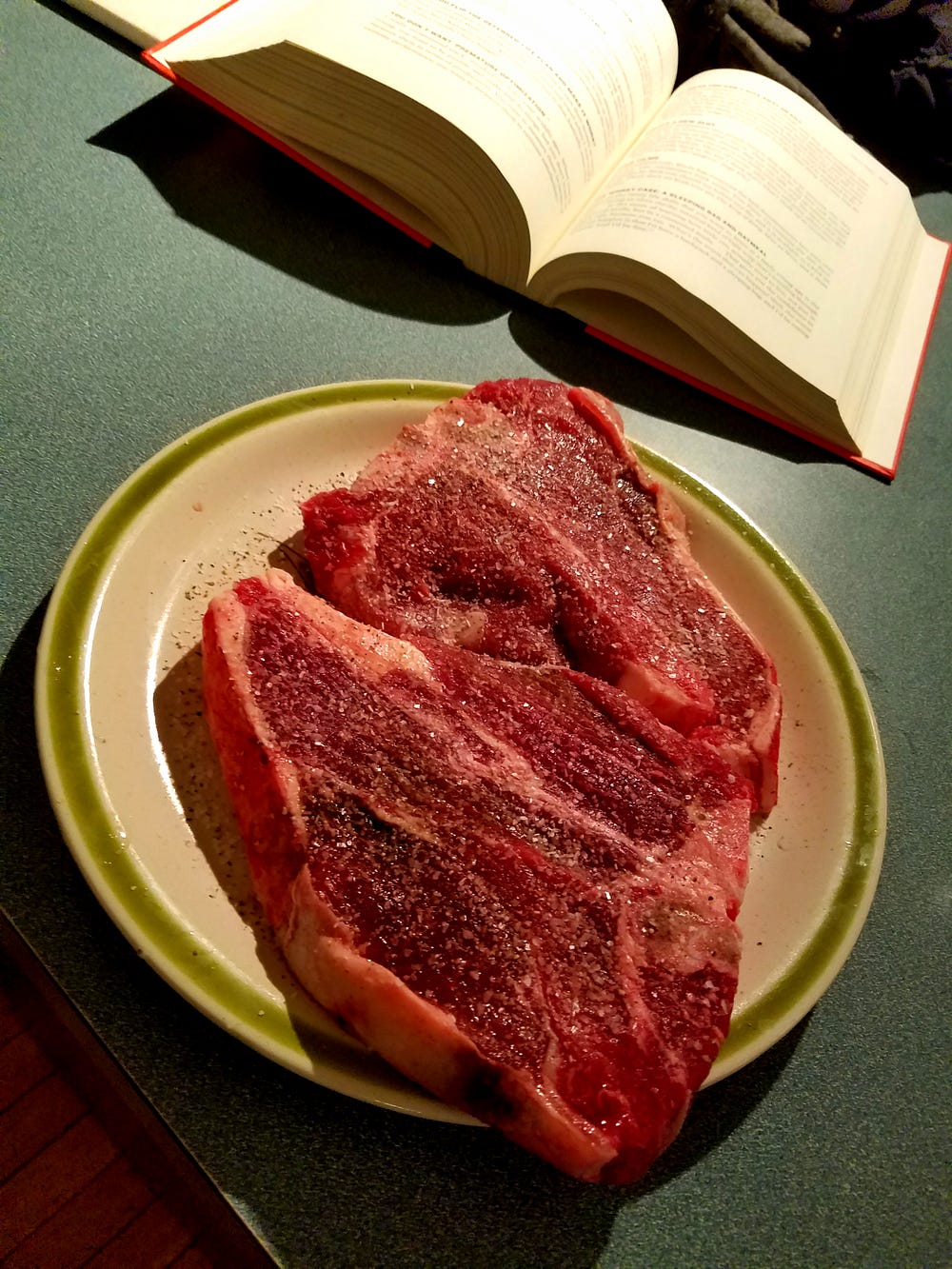
Grass-fed Beef — The Most Vegan Item In The Supermarket


Probably the most vegan item you can buy in the supermarket is a pound of grass-fed beef.
I was thinking about that heretical idea as I drove through my neighboring countryside, scanning empty cornfields for signs of life and wondering at the hubris of mankind. When did we decide that we can own all the lands of the Earth and use every square inch of it for our own needs? About 10,000 years ago, actually, when we invented the idea of agriculture.
Sadly, in the practice of agriculture it is impossible to not cause endless suffering to many living creatures. The most suffering of all is caused by annual agriculture, the cultivation of vegetables, including grains, beans, and rice, that only take one year to grow from seed to food. We displace countless wild animals from their homes and lands when we cultivate crops. Not only that, we also kill thousands of creatures when we till the soil.
I meditated on the empty corn fields for hours. In the end, what it represents is a graveyard for all wildlife, from the invertebrate worm to the feathery bird. The entire wild ecosystem of endless acres is completely interrupted by the tillage of all arable land.
About 400 million acres in the US alone is used to grow crops, which is about 40% of all US land.
This of course feeds us our daily meals, but it takes away the daily meals of billions of animals, as well as destroying their homes, families, hunting grounds, and so on. Not to mention the terrible slave-like conditions that many farm workers in the field are subjected to. Humans are animals as well.
See, I don’t believe in any way that a vegan diet actually causes less suffering in the long run then any other diet. All annual agriculture provides fertile ground for the casual extermination of hundreds of species of animals on a yearly basis.
That is why, in truth, a pound of grass-fed beef accounts for less suffering per capita then a pound of corn.

We are all looking at the problem of food morality through the wrong lens.
We think ”I need a moral framework on which to hang my hat and proudly proclaim myself this or that in order to feel like I am not a bad person.” Instead of clustering around that flawed outlook, I want to encourage us all, as a farmer and outdoorsman, to except the fact that life feeds on life, and began the healing process, the regeneration of spirit, by respecting the life energy that resides in everything that we eat.
We should respect the life energy in everything that we consume, from the tree for firewood to the petroleum to fuel our car, both the accumulated energy of ancient sunlight captured by perennial plants.
We exploit life energy endlessly, day after day, in various and sundry ways, including driving our cars on tarred roads and turning on our plastic phones to surf the internet, all of which is powered by the dark black blood of dead trees.
Veganism is a laudable idea, but for some it provides a framework for moral superiority. Cultivating a savior complex is a natural result of following any ideological cause, and life is then seen through a framework that excludes anything that doesn’t fit into that ideology. And the reality is that we all consume life energy, endlessly.
If the primary goal of veganism is to reduce suffering, then many of us are vegan, and a diet composed of primarily grass-fed beef and dairy, as well as free-range chicken eggs and perennial plants products, is the most vegan diet that there is.
We need to examine our relationship to land and the life energy it contains. In the early 1900s farmers knew that to keep the land in good tilth, which meant healthy and productive, they needed to let their fields go fallow. The idea that a piece of land is worthless of it is wild is prevalent in our society, and the idea of land allowed to go fallow is anathema.
In our modern society we feel that all things should at all times be as productive as possible.
But the funny apart of the term fallow was that it didn’t mean that the land was actually resting. No, what it meant was that the farmer was not coercing the land into productivity with a blade and an engine. When allowed to fall back into fallowness, the land itself bursts forth with wild life and energy beyond what is possible with an annual agriculture. The life stories of a million creatures play out and contribute to the regeneration of a piece of fallow land, a wild acre, a small part of planet Earth.
Our current framing of the food production problem is this: We need to utilize annual agriculture as heavily as possible in order to feed the population. As farmers, our mode is “boom or bust”. We don’t think we can spend 10 years to consciously design a perennial animal-based agriculture, because we need cash right now.
So what is really anti-vegan, what really harms animals, is this idea — that we need to produce annual crops on every square inch of land, creating a wildlife graveyard on 40% of America’s land in order to feed our endless hunger.
When we get right down to brass tacks, I don’t think that the majority of the people on the planet really understand what it takes to grow our own food. And this disconnection plays out across urban centers all around the globe, where people make a thousand choices trying to do the best they can with the panoply of annual agriculture products available.
Cheap food is killing our connection to the landscape.
More people on the planet means more resources being extracted from the earth, regardless of whether or not we are vegan. Avocado producing countries are feeling the avocado squeeze because of American’s high demand for guacamole. Acres of rainforest are being bulldozed to plant more avocado trees. Demand is so high that Mexico, which produces about half of the world’s supply, is thinking about importing avocados, while an average Mexican can’t even afford to buy them to eat.
All this to say, having your vegan raw food avocado chocolate cake isn’t as harmless as you may think.
If we really do take a true audit of the death and destruction our lifestyles wreak upon he natural world, we would all be surprised. We all live a trail of devastation as we go through each day, because all life consumes life in order to thrive- -this is the natural way of things, as far as I know. Is your plastic fleece hoodie so innocent, and is your root vegetable lunch so kind to the earth?
All root vegetables have to be planted in tilled land — how many deaths occurred when the land was tilled? Weeded? Cultivated? And finally, all root vegetables have to be dug up and the land prepared for next years crop.
When you wash your fleece in your washing machine, microbeads of plastic flow into your waste stream, and ultimately down into rivers and out into the sea, causing serious health problems for marine life.
What is important right now is to focus on gaining perspective on the larger, overarching issue that have as a society: We do not respect the life force.
Modern man just doesn’t respect the life that resides in all things, and is consciously and with much deliberation consuming all the useful energy until nature, the planet, is completely out of balance.
The planet will recover one way or another. But that Earth’s healing process may not include us if we do not choose to live more consciously.
And I certainly don’t think that means going vegan.
What it means is cultivating a real relationship with your food, for one thing. Eating locally will always trump any dietary morality play. When we eat locally, we create a relationship with the food that we put in our mouths every day. This relationship is like any other relationship, it needs work and care.
As Michael Pollan advocates, skip all the bullshit foods in the middle of the supermarket, all the packaged nonsense that is 90% corn-based. Corn-based foods are the least vegan foods you can purchase. They contain the most externalized suffering of any food group that I can imagine other then sugar, the other main ingredient on most of that packaged-foods garbage.
Instead of any packaged garbage, stock up on meats, vegetables, dairy, eggs, and all other whole foods. Just start there. Then search out your local farmers and purchase whole foods directly. Cultivate real relationships, in one way or another.
That is the only way to begin the real healing process.
We can reduce suffering on the planet by consciously entering into a relationship with the land, the people that live on the land, and the plants and animals that we consume.

miércoles, 9 de mayo de 2018

Slavoj Zizek: “Las mujeres tienen derecho a objetualizarse”

El filósofo recibe la Medalla de Oro del Círculo de Bellas Artes en Madrid.

Slavoj Zizek, este lunes durante su charla en el Círculo de Bellas Artes de Madrid.

Cierto. Y no solo. Hoy en día, Zizek es uno de los filósofos más conocidos del planeta, adorado por quienes celebran sus golpes enfurecidos contra la corrección política y la democracia capitalista; criticado por los que le consideran poco más que un espejismo. El Círculo de Bellas Artes de Madrid, desde luego, pertenece al primer grupo. Ayer le entregó su Medalla de Oro y acogió una charla del pensador titulada Ernst Lubitsch: Cinismo, humor y compromiso.

Zizek empezó celebrando que “todos los grandes cambios empiezan con reflexiones inútiles” y lanzó sus ráfagas verbales por variados derroteros: los videojuegos, el feminismo, las drogas, la herencia de Mayo del 68 o la pornografía. Apuntó el dedo contra el antifascismo como nuevo opio del pueblo. “Trump, Le Pen u Orban están siendo demonizados como el diablo contra el que unirse. Son una amenaza pero esta imagen sirve como fetiche político que está impidiendo el obstruccionismo más básico. En Francia, Macron era el candidato antifascista, y solo por eso se desechaba cualquier crítica”, aseguró.

A partir de ahí, dedicó parte de su charla a la emancipación femenina. Y a polemiza. “Cuando las mujeres se visten provocativas, se objetualizan para atraer al hombre, están jugando activamente. Y esto es lo que molesta a nuestro chovinismo masculino que se indigna contra una chica que provoca y luego no quiere acostarse con nosotros. Rechazo la crítica a la objetualización que hace el feminismo; estoy a favor, es uno de los mayores logros de la liberación sexual. Las mujeres tienen derecho a objetualizarse; deberían tener el control del juego de la seducción”. Él, en sus conferencias, siempre lo tiene. Tanto que de Lubitsch, en realidad, ni habló.

jueves, 26 de abril de 2018

Luigi Zoja: "En la sociedad pospatriarcal, destituido el padre, reaparece el lado masculino más terrible"

El analista y sociólogo italiano afirma que existe correlación entre la ausencia del padre y la tendencia del varón adolescente a la pandilla, la delincuencia y la droga. Presenta una reedición actualizada de “El gesto de Héctor”, una fascinante historia de la función paterna
 Play
La generación de los 70 quería poner fin a los abusos del patriarcado pero, "se borró demasiado del padre", y paradójicamente "las sociedades pospatriarcales siguen siendo macho-céntricas, sólo que hoy existe más la horda, la manada de los machos", dice Luigi Zoja en esta charla con Infobae. El ensayista está de visita en Buenos Aires, al tiempo que sale a librerías una reedición de El gesto de Héctor. Prehistoria, historia y actualidad de la figura del padre (Taurus, 2018).
"No se trata solo de que la cultura nos haya proporcionado al padre, sino de que tal vez su propia apariencia nos ha dado la cultura, la salida definitiva del estado primordial, de la condición animal", escribe Zoja en la introducción de su ensayo. Lo que a su vez explicaría por qué la retirada de muchos hombres de la función paterna implica una regresión a formas de violencia inquietantes. Hasta los resultados de las pruebas PISA, que muestran un continuo descenso en el rendimiento de los estudiantes varones, tendrían, en opinión del ensayista, un vínculo con esta destitución del padre.
Y, en ausencia de la ley paterna, la Iglesia Católica, señala Zoja, pese "a las críticas fundadas" que se le pueden hacer, resulta ser, en algunas zonas y barrios marginales, la última barrera frente a la mafia que recluta a jóvenes en "orfandad" de padre.
La modernidad, con su libertad para las separaciones, es irreversible. Pero, cree Zoja, esta ausencia del padre ha tocado su techo y posiblemente exista hoy conciencia de sus efectos negativos, aunque no sea fácil predecir hacia dónde se encamina la sociedad pospatriarcal.
Entre tanto, su libro ofrece muchas pistas y pone en evidencia varias paradojas en la transformación de una función que, contra lo que puede parecer, es muy reciente en la larga historia de la evolución humana.
Luigi Zoja nació en 1943. Es sociólogo y analista junguiano y fue presidente de la Asociación Internacional de Psicología analítica. Su libro, que ya es un clásico, toma la figura del héroe troyano Héctor, entre otros mitos de la Antigüedad clásica, como arquetipo en la "creación" de la figura paterna, y también hace un recorrido de ésta a través de toda la historia hasta la actualidad.
Luigi Zoja - El gesto de Hector 1
— Usted sostiene que ya estamos en una sociedad pospatriarcal, aunque subsistan estructuras mentales, fundamentalmente marcada por la destitución del padre, o del hombre de su rol de padre. ¿Eso es positivo o negativo en su opinión?
— No tengo la autoridad para decirlo, sólo soy un psicoanalista. Fue más problemático de lo que se esperaba; yo pertenezco a la generación de los años 70, que esperaba cambiar muchas cosas en la sociedad de Europa occidental y que, entre otras cosas, colaboraba mucho con el movimiento feminista. Se esperaba, dicho muy groseramente y en resumidas cuentas, tener una sociedad con valores más femeninos y esto en la política podía por ejemplo corresponderse con gastar menos en armas y más en servicios sociales, que son como una prolongación de una actitud materna, y destituir, o borrar, los excesos del patriarcado, no necesariamente del padre, sino del patriarcado. Como ambas cosas están ligadas probablemente se borró demasiado del padre en el sentido familiar y lo que resultó no es una sociedad… en fin, hubo logros, claro, en lo que concierne a los derechos de las mujeres, pero, en general, tanto en América del Norte, como en América Latina o en Europa –por no hablar del Este-, las sociedades pospatriarcales siguen siendo macho-céntricas, sólo que existe más la horda, la manada de los machos. Eso me parece bastante alarmante, peligroso. Las estadísticas de violencia entre los adolescentes varones en muchos países está fuera de control.
— Hay una paradoja a la que quizás su libro dé alguna respuesta y es que avanza el movimiento de emancipación de la mujer, avanza la igualdad, y sin embargo parece aumentar la violencia familiar y dentro de ella el femicidio. Hay quien dice que es sólo porque ahora se denuncia esta violencia, se la ve. Ahora bien, usted señala que el hombre, al ser destituido de su rol de padre, vuelve al instinto primitivo, que es la horda, y eso también puede explicar el aumento de la violencia. 
— Creo que se da una combinación de los dos factores. Ahora en Italia se creó la categoría femicidio. Antes probablemente se mataba a las mujeres como hoy sólo que se hablaba de homicidio y no de femicidio. Al mismo tiempo, es muy probable que estemos viendo también en muchos ambientes una degeneración típica del género masculino. Es decir, no es que desaparece, solo que hay estas dos polaridades: la del padre seguramente tenía que ser criticada, porque había abusos en todo sentido, pero el padre también estaba dedicado a la formación de los hijos, particularmente de los adolescentes varones cuando tienen, en todo el mundo y en toda época, esa pulsión de energía casi física, hormonal. Desapareciendo esto, lo que reaparece es precisamente el lado masculino más terrible. Se ve por ejemplo en las estadísticas de la OCDE, los 20 países más desarrollados incluyendo a la Argentina, es que en las últimas dos décadas el promedio de las prestaciones de los adolescentes varones sigue cayendo con respecto a…
— Usted se refiere a las pruebas PISA que miden el nivel educativo.
— Exactamente. Los varones siguen bajando. Y las pocas interpretaciones psicológicas de esto dicen que entre las mujeres permanece el modelo de la chica exitosa que ya se ve en la escuela, que estudia bastante, etcétera. Para los varones, particularmente en los sectores desfavorecidos, el ideal es el que va por primera vez a la escuela con un cuchillo, por ejemplo. Aun si está el buen estudiante, la admiración va hacia el lado más primitivo de la masculinidad. No sé si se conoce el clásico cuento italiano Pinocho. Pinocho es hijo de un padre muy débil y se va, siguiendo a un compañero más grande, el Mecha, que es un transgresor total. Eso es típico de los adolescentes varones en cada generación, y es difícil ponerles límites.

“Pinocho es hijo de un padre muy débil y se va, siguiendo a un compañero más grande, el Mecha, un transgresor total”, dice Zoja, que toma en su libro muchos ejemplos de la literatura y del cine
— Es decir que la ausencia del padre, la ausencia de una figura paterna, lleva a ese adolescente a buscar esa referencia en otro lado. En el aspecto más primitivo, en el de la fuerza.
— En el aspecto de la fuerza y no del orden. Decimos orden no en el sentido militarizado, dictatorial, sino el mínimo de orden que una sociedad civil necesita. En Estados Unidos, donde como sabemos la población carcelaria es muy grande, de entre dos y tres millones de internos, es decir, estadísticamente muy significativa, la gran, gran mayoría, más del 80 por ciento de los norteamericanos que están en la cárcel son hijos de familias sin padre.Entonces la correlación para los estadísticos es muy, muy, evidente.
 El derecho al divorcio, algo natural e irreversible, tiene un lado problemático que es esta ausencia del padre, cuya función sufrió un derrumbe tanto estadístico como simbólico
— Correlación entre ausencia del padre y violencia juvenil, delincuencia, drogadicción…
— La drogadicción fue empeorando claramente en Estados Unidos. Era típica de los afroamericanos, que ya no tenían padre por la herencia de la esclavitud, pero ahora ingresó también en las clases medias blancas. Y ello también es consecuencia de las leyes de la democracia de hoy, del derecho al divorcio, que es algo natural e irreversible, pero tiene un lado problemático que es esta ausencia del padre, cuya función sufrió un derrumbe tanto desde el punto de vista material, estadístico, como desde el punto de vista simbólico.

— El feminismo, especialmente cierto feminismo muy agresivo y con un discurso anti-varón genérico, ¿es causa o consecuencia de la destitución del padre?
— Me parece que es más una consecuencia; sería exagerado acusarlo… Incluso hoy, no solo en Italia, sino en toda Europa occidental, si bien existe un feminismo duro, está muy, muy, reducido si uno lo compara con el de hace medio siglo.  Mi análisis, que no es solo mío, también retomo material de historiadores y antropólogos, es que toda la historia Occidente, nos guste o no, es una historia patriarcal, con su machismo, su agresividad, sus excesos, etcétera. Pero fue patriarcal y el padre ofrecía una estructura. Al pasar a la Modernidad, con la Ilustración, el secularismo y el análisis más racional, con la Revolución Francesa que anuncia el principio liberté, égalité, fraternité, es decir el nivel horizontal, donde los hermanos se vuelven en un principio más importantes para la nueva sociedad que el principio vertical de la autoridad del rey que, en la familia, era representada por el padre. Se trata de borrar las dos, no solo la autoridad del rey sino también la excesiva del padre en la familia y se establece el principio de los hermanos que, en su forma problemática, se convierte en el principio de la horda.
— Otra paradoja que destaca en su libro es que, por un lado se destituye al padre, o su función se va borrando, y en parte influyen mucho las separaciones con el alejamiento físico del padre de la familia, pero al mismo tiempo desde el punto de vista legal el padre tiene una obligación de por vida. Incluso usted señala que ello implica una desigualdad porque la mujer puede abortar sin consultar al progenitor varón –allí donde es legal, y el proyecto que se discute actualmente en Argentina así lo autorizaría-, pero el hombre está obligado a reconocer y mantener a su hijo aunque no lo haya deseado… 
— Claro. Bueno, tampoco la biología es democrática… Y en general, a lo largo de la historia, el sexo masculino sacó más provecho de la diferencia. Ahora tal vez ha llegado un momento en el cual es al revés, porque con el ADN siempre se puede trazar quién fue el padre, aun si éste no deseaba serlo.
 En las sociedades humanas más primitivas, ya hay un padre
—Al varón se le suelen atribuir instintos más salvajes, más primitivos, pero al mismo tiempo usted dice que la función paterna del hombre es una construcción reciente, cultural, y lo que nos diferencia de los animales, más que la función materna.
— Cultural, sí. Esto no lo digo solamente yo. La principal fundadora de la antropología en el siglo pasado, Margaret Mead, fue la primera en analizar la sociedad norteamericana moderna diciendo eso. No tiene que enseñar la a ser padre, si no se olvida. En los animales más cercanos a nosotros, los grandes monos, que tienen características genéticas iguales a las nuestras en un 96, 97 por ciento, todavía los machos simplemente pelean entre ellos y el más fuerte organiza un harén de hembras y transmite sus caracteres genéticos y se selecciona entonces siempre al más agresivo y peleador. Esto, en las sociedades animales más cercanas a la nuestra. En las sociedades humanas más primitivas ya hay un padre. Entonces se creó algo que es diferente a todas las sociedades.  Pero fue, y es, una construcción; lo dice la antropología, la sociología, los historiadores más o menos. Porque aunque hay también un instinto protector en el macho hacia los pequeños, es muy reducido si lo comparamos con la maternidad, porque no surge del cuerpo de manera tan directa, Es una construcción, es difícil. Una cosa buena, surgida hace unos años, es que se agrega al padre a los cursos pre-parto para las mujeres que van a ser madres. Es fundamental, es un hecho de educación. Porque el instinto nos guió hasta algo que pasó 9 meses antes; no tenemos relación y tenemos que construir una relación con el pequeño ser que llega. Y acá hay algo interesante. En mi práctica clínica como psicoanalista veo muchísimos segundos compañeros o segundos maridos de una mujer que tiene hijos del primer matrimonio. Se dice incluso que cada paternidad es una adopción: tengo que tener la voluntad específica de volverme padre, incluso cuando el hijo es biológicamente mío. Pero eso implica que cuando soy el segundo marido puedo hacer muy bien la tarea. Se trata de construir esta relación día a día.
— Interesante. Ahora, me llamó la atención un detalle en el libro, pero que acá sucede mucho en los barrios marginales, que la última barrera que encuentra un chico sin padre frente a la tentación criminal o la droga, es "el sacerdote socialmente comprometido". En Buenos Aires justamente existe una red de curas villeros que dejó Jorge Bergoglio.
— Sí, en los países católicos pese a todas las críticas que se le hacen a los religiosos, fundadas también, tienen esta función. Y por ejemplo en el Sur de Italia, en Sicilia, son la última barrera en contra de la mafia, que está reclutando entre los adolescentes varones que desean ser "machos", ser sus nuevos soldados. Y los reclutan precisamente en las familias sin padre.

— ¿Qué perspectiva ve? ¿Hacia dónde va la familia, el padre? Usted dice que los hijos todavía tienen la memoria de una imagen paterna y buscan un padre. ¿Qué les espera a esos hijos?
— Teóricamente como es la historia humana la que nos dejó el padre, la historia podría retomarlo… Eso me parece exagerado. Pero la desaparición, la ausencia del padre, llegó a un techo. Esta es la segunda edición actualizada de mi investigación y se veía que este fenómeno seguía creciendo a fines del siglo pasado, pero tocó un techo y no va a crecer más. En las ciudades que, comillas, marcan tendencia, como París o Nueva York, ya la mitad de los chicos está creciendo sin padre.    Pero tocó techo y seguramente hay mucha más conciencia. Hay padres mucho más afectuosos. Hay una nueva generación tierna. Pero el problema de eso es que no sustituye totalmente al padre. Sustituye a la madre en su actitud protectora. El padre tiene la función secundaria de enseñar en la familia que hay leyes. La desaparición de esta función es un hecho problemático porque no es solo estadística, es la crisis de la identidad masculina y los ataques, a veces exagerados, por el hecho de haber nacido varones como si fuese una culpa, ¿no? Entonces los varones padres se vuelven un poco más protectores como una madre, pero es difícil para las nuevas generaciones volverse padres y enseñar a sus hijos varones a ser padres a su vez. Entonces la ausencia de padres es muchas veces no la sola ausencia estadística por el divorcio, sino que hay un padre pero se vuelve pasivo. En mi libro cito una frase de una paciente, bastante impactante, que decía que "el padre tradicional de la familia italiana" -y ella pensaba en su abuelo- "era un tirano pero era un padre; el padre actual es un idiota sentado frente a la televisión". Es decir pasivo.
— Ya no encarna la ley.
— La ley, la responsabilidad. Necesitamos una ley, no sólo en la sociedad, sino también en la familia. No podemos vivir sin ley. Y existe la posibilidad de colaborar con los hijos enseñándoles que la ley es una cosa positiva, que vas a ser feliz cumpliéndola.

lunes, 23 de abril de 2018

What Sleeping With Married Men Taught Me About Infidelity


Photo

CreditBrian Rea

I’m not sure it’s possible to justify my liaisons with married men, but what I learned from having them warrants discussion. Not between the wives and me, though I would be interested to hear their side. No, this discussion should happen between wives and husbands, annually, the way we inspect the tire tread on the family car to avoid accidents.
A few years ago, while living in London, I dated married men for companionship while I processed the grief of being newly divorced. I hadn’t sought out married men specifically. When I created a profile on Tinder and OkCupid, saying I was looking for no-strings-attached encounters, plenty of single men messaged me and I got together with several of them. But many married men messaged me too.
After being married for 23 years, I wanted sex but not a relationship. This is dicey because you can’t always control emotional attachments when body chemicals mix, but with the married men I guessed that the fact that they had wives, children and mortgages would keep them from going overboard with their affections. And I was right. They didn’t get overly attached, and neither did I. We were safe bets for each other.
I was careful about the men I met. I wanted to make sure they had no interest in leaving their wives or otherwise threatening all they had built together. In a couple of cases, the men I met were married to women who had become disabled and could no longer be sexual, but the husbands remained devoted to them.
Continue reading the main story
All told I communicated with maybe a dozen men during that time in my life, and had sex with fewer than half. Others I texted or talked with, which sometimes felt nearly as intimate.
Before I met each man I would ask: “Why are you doing this?” I wanted assurance that all he desired was sex.
What surprised me was that these husbands weren’t looking to have more sex. They were looking to have any sex.
I met one man whose wife had implicitly consented to her husband having a lover because she was no longer interested in sex, at all. They both, to some degree, got what they needed without having to give up what they wanted. But the other husbands I met would have preferred to be having sex with their wives. For whatever reason, that wasn’t happening.
I know what it feels like to go off sex, and I know what it’s like to want more than my partner. It’s also a tall order to have sex with the same person for more years than our ancestors ever hoped to live. Then, at menopause, a woman’s hormones suddenly drop and her desire can wane.
At 49, I was just about there myself, and terrified of losing my desire for sex. Men don’t have this drastic change. So we have an imbalance, an elephant-size problem, so burdensome and shameful we can scarcely muster the strength to talk about it.
Maybe the reason some wives aren’t having sex with their husbands is because, as women age, we long for a different kind of sex. I know I did, which is what led me down this path of illicit encounters. After all, nearly as many women are initiating affairs as men.
If you read the work of Esther Perel, the author of the recently published book “State of Affairs,” you’ll learn that, for many wives, sex outside of marriage is their way of breaking free from being the responsible spouses and mothers they have to be at home. Married sex, for them, often feels obligatory. An affair is adventure.
Meanwhile, the husbands I spent time with would have been fine with obligatory sex. For them, adventure wasn’t the main reason for their adultery.
The first time I saw my favorite married man pick up his pint of beer, the sleeve of his well-tailored suit pulled back from his wrist to reveal a geometric kaleidoscope of tattoos. He was cleanshaven and well mannered with a little rebel yell underneath. The night I saw the full canvas of his tattoo masterpiece, we drank prosecco, listened to ’80s music and, yes, had sex. We also talked.
I asked him: “What if you said to your wife, ‘Look, I love you and the kids but I need sex in my life. Can I just have the occasional fling or a casual affair?’”
He sighed. “I don’t want to hurt her,” he said. “She’s been out of the work force for 10 years, raising our kids and trying to figure out what she wants to do with her life. If I asked her that kind of question, it would kill her.”
“So you don’t want to hurt her, but you lie to her instead. Personally, I’d rather know.”
Well, maybe I would rather know. My own marriage had not broken up over an affair so I couldn’t easily put myself in her position.
“It’s not necessarily a lie if you don’t confess the truth,” he said. “It’s kinder to stay silent.”
“I’m just saying I couldn’t do that. I don’t want to be afraid of talking honestly about my sex life with the man I’m married to, and that includes being able to at least raise the subject of sex outside of marriage.”
“Good luck with that!” he said.
“We go into marriage assuming we’ll be monogamous,” I said, “but then we get restless. We don’t want to split up, but we need to feel more sexually alive. Why break up the family if we could just accept the occasional affair?”
He laughed. “How about we stop talking about it before this affair stops being fun?”
I never convinced any husband that he could be honest about what he was doing. But they were mostly good-natured about it, like a patient father responding to a child who keeps asking, “Why, why, why?”
Maybe I was being too pragmatic about issues that are loaded with guilt, resentment and fear. After all, it’s far easier to talk theoretically about marriage than to navigate it. But my attitude is that if my spouse were to need something I couldn’t give him, I wouldn’t keep him from getting it elsewhere, as long as he did so in a way that didn’t endanger our family.
I suppose I would hope his needs would involve fishing trips or beers with friends. But sex is basic. Physical intimacy with other human beings is essential to our health and well-being. So how do we deny such a need to the one we care about most? If our primary relationship nourishes and stabilizes us but lacks intimacy, we shouldn’t have to destroy our marriage to get that intimacy somewhere else. Should we?
I didn’t have a full-on affair with the tattooed husband. We slept together maybe four times over a few years. More often we talked on the phone. I never felt possessive, just curious and happy to be in his company.
After our second night together, though, I could tell this was about more than sex for him; he was desperate for affection. He said he wanted to be close to his wife but couldn’t because they were unable to get past their fundamental disconnect: lack of sex, which led to a lack of closeness, which made sex even less likely and then turned into resentment and blame.
We all go through phases of wanting it and not wanting it. I doubt most women avoid having sex with their husbands because they lack physical desire in general; we are simply more complex sexual animals. Which is why men can get an erection from a pill but there’s no way to medically induce arousal and desire in women.
I am not saying the answer is non-monogamy, which can be rife with risks and unintended entanglements. I believe the answer is honesty and dialogue, no matter how frightening. Lack of sex in marriage is common, and it shouldn’t lead to shame and silence. By the same token, an affair doesn’t have to lead to the end of a marriage. What if an affair — or, ideally, simply the urge to have one — can be the beginning of a necessary conversation about sex and intimacy?
What these husbands couldn’t do was have the difficult discussion with their wives that would force them to tackle the issues at the root of their cheating. They tried to convince me they were being kind by keeping their affairs secret. They seemed to have convinced themselves. But deception and lying are ultimately corrosive, not kind.
In the end, I had to wonder if what these men couldn’t face was something else altogether: hearing why their wives no longer wanted to have sex with them. It’s much easier, after all, to set up an account on Tinder.