lunes, 1 de julio de 2019

Your Professional Decline Is Coming (Much) Sooner Than You Think

Here’s how to make the most of it.

Luci Gutiérre"It’s not true that no one needs you anymore.”
Again, the woman: “Oh, stop saying that.”

At the end of the flight, as the lights switched on, I finally got a look at the desolate man. I was shocked. I recognized him—he was, and still is, world-famous. Then in his mid‑80s, he was beloved as a hero for his courage, patriotism, and accomplishments many decades ago.
As he walked up the aisle of the plane behind me, other passengers greeted him with veneration. Standing at the door of the cockpit, the pilot stopped him and said, “Sir, I have admired you since I was a little boy.” The older man—apparently wishing for death just a few minutes earlier—beamed with pride at the recognition of his past glories.
For selfish reasons, I couldn’t get the cognitive dissonance of that scene out of my mind. It was the summer of 2015, shortly after my 51st birthday. I was not world-famous like the man on the plane, but my professional life was going very well. I was the president of a flourishing Washington think tank, the American Enterprise Institute. I had written some best-selling books. People came to my speeches. My columns were published in The New York Times.
But I had started to wonder: Can I really keep this going? I work like a maniac. But even if I stayed at it 12 hours a day, seven days a week, at some point my career would slow and stop. And when it did, what then? Would I one day be looking back wistfully and wishing I were dead? Was there anything I could do, starting now, to give myself a shot at avoiding misery—and maybe even achieve happiness—when the music inevitably stops?
Though these questions were personal, I decided to approach them as the social scientist I am, treating them as a research project. It felt unnatural—like a surgeon taking out his own appendix. But I plunged ahead, and for the past four years, I have been on a quest to figure out how to turn my eventual professional decline from a matter of dread into an opportunity for progress.
Here’s what I’ve found.
The field of “happiness studies” has boomed over the past two decades, and a consensus has developed about well-being as we advance through life. In The Happiness Curve: Why Life Gets Better After 50, Jonathan Rauch, a Brookings Institution scholar and an Atlantic contributing editor, reviews the strong evidence suggesting that the happiness of most adults declines through their 30s and 40s, then bottoms out in their early 50s. Nothing about this pattern is set in stone, of course. But the data seem eerily consistent with my experience: My 40s and early 50s were not an especially happy period of my life, notwithstanding my professional fortunes.
So what can people expect after that, based on the data? The news is mixed. Almost all studies of happiness over the life span show that, in wealthier countries, most people’s contentment starts to increase again in their 50s, until age 70 or so. That is where things get less predictable, however. After 70, some people stay steady in happiness; others get happier until death. Others—men in particular—see their happiness plummet. Indeed, depression and suicide rates for men increase after age 75.

Luci Gutiérrez
This last group would seem to include the hero on the plane. A few researchers have looked at this cohort to understand what drives their unhappiness. It is, in a word, irrelevance. In 2007, a team of academic researchers at UCLA and Princeton analyzed data on more than 1,000 older adults. Their findings, published in the Journal of Gerontology, showed that senior citizens who rarely or never “felt useful” were nearly three times as likely as those who frequently felt useful to develop a mild disability, and were more than three times as likely to have died during the course of the study.
One might think that gifted and accomplished people, such as the man on the plane, would be less susceptible than others to this sense of irrelevance; after all, accomplishment is a well-documented source of happiness. If current accomplishment brings happiness, then shouldn’t the memory of that accomplishment provide some happiness as well?
Maybe not. Though the literature on this question is sparse, giftedness and achievements early in life do not appear to provide an insurance policy against suffering later on. In 1999, Carole Holahan and Charles Holahan, psychologists at the University of Texas, published an influential paper in The International Journal of Aging and Human Development that looked at hundreds of older adults who early in life had been identified as highly gifted. The Holahans’ conclusion: “Learning at a younger age of membership in a study of intellectual giftedness was related to … less favorable psychological well-being at age eighty.”
This study may simply be showing that it’s hard to live up to high expectations, and that telling your kid she is a genius is not necessarily good parenting. (The Holahans surmise that the children identified as gifted might have made intellectual ability more central to their self-appraisal, creating “unrealistic expectations for success” and causing them to fail to “take into account the many other life influences on success and recognition.”) However, abundant evidence suggests that the waning of ability in people of high accomplishment is especially brutal psychologically. Consider professional athletes, many of whom struggle profoundly after their sports career ends. Tragic examples abound, involving depression, addiction, or suicide; unhappiness in retired athletes may even be the norm, at least temporarily. A study published in the Journal of Applied Sport Psychology in 2003, which charted the life satisfaction of former Olympic athletes, found that they generally struggled with a low sense of personal control when they first stopped competing.
Recently, I asked Dominique Dawes, a former Olympic gold-medal gymnast, how normal life felt after competing and winning at the highest levels. She told me that she is happy, but that the adjustment wasn’t easy—and still isn’t, even though she won her last Olympic medal in 2000. “My Olympic self would ruin my marriage and leave my kids feeling inadequate,” she told me, because it is so demanding and hard-driving. “Living life as if every day is an Olympics only makes those around me miserable.”
Why might former elite performers have such a hard time? No academic research has yet proved this, but I strongly suspect that the memory of remarkable ability, if that is the source of one’s self-worth, might, for some, provide an invidious contrast to a later, less remarkable life. “Unhappy is he who depends on success to be happy,” Alex Dias Ribeiro, a former Formula 1 race-car driver, once wrote. “For such a person, the end of a successful career is the end of the line. His destiny is to die of bitterness or to search for more success in other careers and to go on living from success to success until he falls dead. In this case, there will not be life after success.”
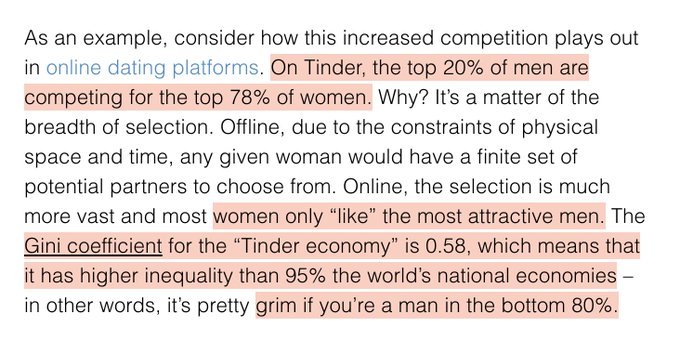
Call it the Principle of Psychoprofessional Gravitation: the idea that the agony of professional oblivion is directly related to the height of professional prestige previously achieved, and to one’s emotional attachment to that prestige. Problems related to achieving professional success might appear to be a pretty good species of problem to have; even raising this issue risks seeming precious. But if you reach professional heights and are deeply invested in being high up, you can suffer mightily when you inevitably fall. That’s the man on the plane. Maybe that will be you, too. And, without significant intervention, I suspect it will be me.
The Principle of Psychoprofessional Gravitation can help explain the many cases of people who have done work of world-historical significance yet wind up feeling like failures. Take Charles Darwin, who was just 22 when he set out on his five-year voyage aboard the Beagle in 1831. Returning at 27, he was celebrated throughout Europe for his discoveries in botany and zoology, and for his early theories of evolution. Over the next 30 years, Darwin took enormous pride in sitting atop the celebrity-scientist pecking order, developing his theories and publishing them as books and essays—the most famous being On the Origin of Species, in 1859.
But as Darwin progressed into his 50s, he stagnated; he hit a wall in his research. At the same time an Austrian monk by the name of Gregor Mendel discovered what Darwin needed to continue his work: the theory of genetic inheritance. Unfortunately, Mendel’s work was published in an obscure academic journal and Darwin never saw it—and in any case, Darwin did not have the mathematical ability to understand it. From then on he made little progress. Depressed in his later years, he wrote to a close friend, “I have not the heart or strength at my age to begin any investigation lasting years, which is the only thing which I enjoy.”
Presumably, Darwin would be pleasantly surprised to learn how his fame grew after his death, in 1882. From what he could see when he was old, however, the world had passed him by, and he had become irrelevant. That could have been Darwin on the plane behind me that night.
It also could have been a younger version of me, because I have had precocious experience with professional decline.
As a child, I had just one goal: to be the world’s greatest French-horn player. I worked at it slavishly, practicing hours a day, seeking out the best teachers, and playing in any ensemble I could find. I had pictures of famous horn players on my bedroom wall for inspiration. And for a while, I thought my dream might come true. At 19, I left college to take a job playing professionally in a touring chamber-music ensemble. My plan was to keep rising through the classical-music ranks, joining a top symphony orchestra in a few years or maybe even becoming a soloist—the most exalted job a classical musician can hold.
But then, in my early 20s, a strange thing happened: I started getting worse. To this day, I have no idea why. My technique began to suffer, and I had no explanation for it. Nothing helped. I visited great teachers and practiced more, but I couldn’t get back to where I had been. Pieces that had been easy to play became hard; pieces that had been hard became impossible.
Perhaps the worst moment in my young but flailing career came at age 22, when I was performing at Carnegie Hall. While delivering a short speech about the music I was about to play, I stepped forward, lost my footing, and fell off the stage into the audience. On the way home from the concert, I mused darkly that the experience was surely a message from God.
But I sputtered along for nine more years. I took a position in the City Orchestra of Barcelona, where I increased my practicing but my playing gradually deteriorated. Eventually I found a job teaching at a small music conservatory in Florida, hoping for a magical turnaround that never materialized. Realizing that maybe I ought to hedge my bets, I went back to college via distance learning, and earned my bachelor’s degree shortly before my 30th birthday. I secretly continued my studies at night, earning a master’s degree in economics a year later. Finally I had to admit defeat: I was never going to turn around my faltering musical career. So at 31 I gave up, abandoning my musical aspirations entirely, to pursue a doctorate in public policy.
Life goes on, right? Sort of. After finishing my studies, I became a university professor, a job I enjoyed. But I still thought every day about my beloved first vocation. Even now, I regularly dream that I am onstage, and wake to remember that my childhood aspirations are now only phantasms.
I am lucky to have accepted my decline at a young enough age that I could redirect my life into a new line of work. Still, to this day, the sting of that early decline makes these words difficult to write. I vowed to myself that it wouldn’t ever happen again.
Will it happen again? In some professions, early decline is inescapable. No one expects an Olympic athlete to remain competitive until age 60. But in many physically nondemanding occupations, we implicitly reject the inevitability of decline before very old age. Sure, our quads and hamstrings may weaken a little as we age. But as long as we retain our marbles, our quality of work as a writer, lawyer, executive, or entrepreneur should remain high up to the very end, right? Many people think so. I recently met a man a bit older than I am who told me he planned to “push it until the wheels came off.” In effect, he planned to stay at the very top of his game by any means necessary, and then keel over.
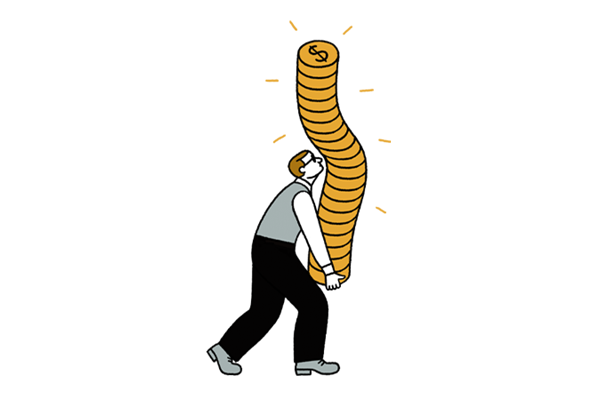
But the odds are he won’t be able to. The data are shockingly clear that for most people, in most fields, decline starts earlier than almost anyone thinks.
Luci Gutiérrez
According to research by Dean Keith Simonton, a professor emeritus of psychology at UC Davis and one of the world’s leading experts on the trajectories of creative careers, success and productivity increase for the first 20 years after the inception of a career, on average. So if you start a career in earnest at 30, expect to do your best work around 50 and go into decline soon after that.
The specific timing of peak and decline vary somewhat depending on the field. Benjamin Jones, a professor of strategy and entrepreneurship at Northwestern University’s Kellogg School of Management, has spent years studying when people are most likely to make prizewinning scientific discoveries and develop key inventions. His findings can be summarized by this little ditty:
Age is, of course, a fever chill
that every physicist must fear.
He’s better dead than living still
when once he’s past his thirtieth year.
The author of those gloomy lines? Paul Dirac, a winner of the 1933 Nobel Prize in Physics.
Dirac overstates the point, but only a little. Looking at major inventors and Nobel winners going back more than a century, Jones has found that the most common age for producing a magnum opus is the late 30s. He has shown that the likelihood of a major discovery increases steadily through one’s 20s and 30s and then declines through one’s 40s, 50s, and 60s. Are there outliers? Of course. But the likelihood of producing a major innovation at age 70 is approximately what it was at age 20—almost nonexistent.
Much of literary achievement follows a similar pattern. Simonton has shown that poets peak in their early 40s. Novelists generally take a little longer. When Martin Hill Ortiz, a poet and novelist, collected data on New York Times fiction best sellers from 1960 to 2015, he found that authors were likeliest to reach the No. 1 spot in their 40s and 50s. Despite the famous productivity of a few novelists well into old age, Ortiz shows a steep drop-off in the chance of writing a best seller after the age of 70. (Some nonfiction writers—especially historians—peak later, as we shall see in a minute.)
Entrepreneurs peak and decline earlier, on average. After earning fame and fortune in their 20s, many tech entrepreneurs are in creative decline by age 30. In 2014, the Harvard Business Review reported that founders of enterprises valued at $1 billion or more by venture capitalists tend to cluster in the 20-to-34 age range. Subsequent research has found that the clustering might be slightly later, but all studies in this area have found that the majority of successful start-ups have founders under age 50.
This research concerns people at the very top of professions that are atypical. But the basic finding appears to apply more broadly. Scholars at Boston College’s Center for Retirement Research studied a wide variety of jobs and found considerable susceptibility to age-related decline in fields ranging from policing to nursing. Other research has found that the best-performing home-plate umpires in Major League Baseball have 18 years less experience and are 23 years younger than the worst-performing umpires (who are 56.1 years old, on average). Among air traffic controllers, the age-related decline is so sharp—and the potential consequences of decline-related errors so dire—that the mandatory retirement age is 56.
In sum, if your profession requires mental processing speed or significant analytic capabilities—the kind of profession most college graduates occupy—noticeable decline is probably going to set in earlier than you imagine.
Sorry.
If decline not only is inevitable but also happens earlier than most of us expect, what should we do when it comes for us?
Whole sections of bookstores are dedicated to becoming successful. The shelves are packed with titles like The Science of Getting Rich and The 7 Habits of Highly Effective People. There is no section marked “Managing Your Professional Decline.”
But some people have managed their declines well. Consider the case of Johann Sebastian Bach. Born in 1685 to a long line of prominent musicians in central Germany, Bach quickly distinguished himself as a musical genius. In his 65 years, he published more than 1,000 compositions for all the available instrumentations of his day.
Early in his career, Bach was considered an astoundingly gifted organist and improviser. Commissions rolled in; royalty sought him out; young composers emulated his style. He enjoyed real prestige.
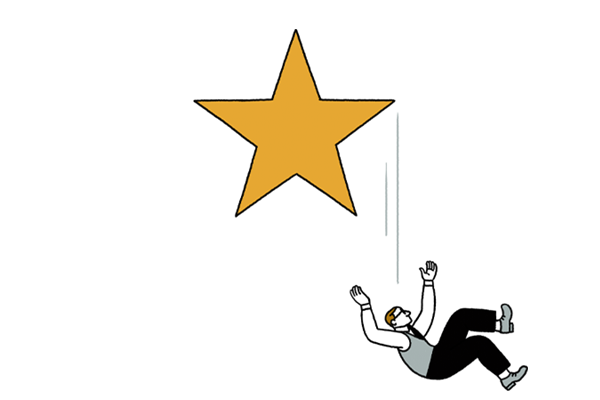
But it didn’t last—in no small part because his career was overtaken by musical trends ushered in by, among others, his own son, Carl Philipp Emanuel, known as C.P.E. to the generations that followed. The fifth of Bach’s 20 children, C.P.E. exhibited the musical gifts his father had. He mastered the baroque idiom, but he was more fascinated with a new “classical” style of music, which was taking Europe by storm. As classical music displaced baroque, C.P.E.’s prestige boomed while his father’s music became passé.
Luci Gutiérrez
Bach easily could have become embittered, like Darwin. Instead, he chose to redesign his life, moving from innovator to instructor. He spent a good deal of his last 10 years writing The Art of Fugue, not a famous or popular work in his time, but one intended to teach the techniques of the baroque to his children and students—and, as unlikely as it seemed at the time, to any future generations that might be interested. In his later years, he lived a quieter life as a teacher and a family man.
What’s the difference between Bach and Darwin? Both were preternaturally gifted and widely known early in life. Both attained permanent fame posthumously. Where they differed was in their approach to the midlife fade. When Darwin fell behind as an innovator, he became despondent and depressed; his life ended in sad inactivity. When Bach fell behind, he reinvented himself as a master instructor. He died beloved, fulfilled, and—though less famous than he once had been—respected.
The lesson for you and me, especially after 50: Be Johann Sebastian Bach, not Charles Darwin.
How does one do that?
A potential answer lies in the work of the British psychologist Raymond Cattell, who in the early 1940s introduced the concepts of fluid and crystallized intelligence. Cattell defined fluid intelligence as the ability to reason, analyze, and solve novel problems—what we commonly think of as raw intellectual horsepower. Innovators typically have an abundance of fluid intelligence. It is highest relatively early in adulthood and diminishes starting in one’s 30s and 40s. This is why tech entrepreneurs, for instance, do so well so early, and why older people have a much harder time innovating.
Crystallized intelligence, in contrast, is the ability to use knowledge gained in the past. Think of it as possessing a vast library and understanding how to use it. It is the essence of wisdom. Because crystallized intelligence relies on an accumulating stock of knowledge, it tends to increase through one’s 40s, and does not diminish until very late in life.
Careers that rely primarily on fluid intelligence tend to peak early, while those that use more crystallized intelligence peak later. For example, Dean Keith Simonton has found that poets—highly fluid in their creativity—tend to have produced half their lifetime creative output by age 40 or so. Historians—who rely on a crystallized stock of knowledge—don’t reach this milestone until about 60.
Here’s a practical lesson we can extract from all this: No matter what mix of intelligence your field requires, you can always endeavor to weight your career away from innovation and toward the strengths that persist, or even increase, later in life.
Like what? As Bach demonstrated, teaching is an ability that decays very late in life, a principal exception to the general pattern of professional decline over time. A study in The Journal of Higher Education showed that the oldest college professors in disciplines requiring a large store of fixed knowledge, specifically the humanities, tended to get evaluated most positively by students. This probably explains the professional longevity of college professors, three-quarters of whom plan to retire after age 65—more than half of them after 70, and some 15 percent of them after 80. (The average American retires at 61.) One day, during my first year as a professor, I asked a colleague in his late 60s whether he’d ever considered retiring. He laughed, and told me he was more likely to leave his office horizontally than vertically.
Our dean might have chuckled ruefully at this—college administrators complain that research productivity among tenured faculty drops off significantly in the last decades of their career. Older professors take up budget slots that could otherwise be used to hire young scholars hungry to do cutting-edge research. But perhaps therein lies an opportunity: If older faculty members can shift the balance of their work from research to teaching without loss of professional prestige, younger faculty members can take on more research.
Patterns like this match what I’ve seen as the head of a think tank full of scholars of all ages. There are many exceptions, but the most profound insights tend to come from those in their 30s and early 40s. The best synthesizers and explainers of complicated ideas—that is, the best teachers—tend to be in their mid-60s or older, some of them well into their 80s.
That older people, with their stores of wisdom, should be the most successful teachers seems almost cosmically right. No matter what our profession, as we age we can dedicate ourselves to sharing knowledge in some meaningful way.
A few years ago, I saw a cartoon of a man on his deathbed saying, “I wish I’d bought more crap.” It has always amazed me that many wealthy people keep working to increase their wealth, amassing far more money than they could possibly spend or even usefully bequeath. One day I asked a wealthy friend why this is so. Many people who have gotten rich know how to measure their self-worth only in pecuniary terms, he explained, so they stay on the hamster wheel, year after year. They believe that at some point, they will finally accumulate enough to feel truly successful, happy, and therefore ready to die.
This is a mistake, and not a benign one. Most Eastern philosophy warns that focusing on acquisition leads to attachment and vanity, which derail the search for happiness by obscuring one’s essential nature. As we grow older, we shouldn’t acquire more, but rather strip things away to find our true selves—and thus, peace.
At some point, writing one more book will not add to my life satisfaction; it will merely stave off the end of my book-writing career. The canvas of my life will have another brushstroke that, if I am being forthright, others will barely notice, and will certainly not appreciate very much. The same will be true for most other markers of my success.
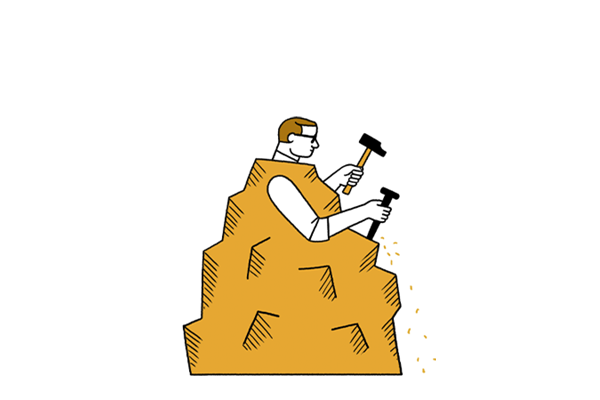
What I need to do, in effect, is stop seeing my life as a canvas to fill, and start seeing it more as a block of marble to chip away at and shape something out of. I need a reverse bucket list. My goal for each year of the rest of my life should be to throw out things, obligations, and relationships until I can clearly see my refined self in its best form.
And that self is … who, exactly?
Luci Gutiérrez
Last year, the search for an answer to this question took me deep into the South Indian countryside, to a town called Palakkad, near the border between the states of Kerala and Tamil Nadu. I was there to meet the guru Sri Nochur Venkataraman, known as Acharya (“Teacher”) to his disciples. Acharya is a quiet, humble man dedicated to helping people attain enlightenment; he has no interest in Western techies looking for fresh start-up ideas or burnouts trying to escape the religious traditions they were raised in. Satisfied that I was neither of those things, he agreed to talk with me.
I told him my conundrum: Many people of achievement suffer as they age, because they lose their abilities, gained over many years of hard work. Is this suffering inescapable, like a cosmic joke on the proud? Or is there a loophole somewhere—a way around the suffering?
Acharya answered elliptically, explaining an ancient Hindu teaching about the stages of life, or ashramas. The first is Brahmacharya, the period of youth and young adulthood dedicated to learning. The second is Grihastha, when a person builds a career, accumulates wealth, and creates a family. In this second stage, the philosophers find one of life’s most common traps: People become attached to earthly rewards—money, power, sex, prestige—and thus try to make this stage last a lifetime.
The antidote to these worldly temptations is Vanaprastha, the third ashrama, whose name comes from two Sanskrit words meaning “retiring” and “into the forest.” This is the stage, usually starting around age 50, in which we purposefully focus less on professional ambition, and become more and more devoted to spirituality, service, and wisdom. This doesn’t mean that you need to stop working when you turn 50—something few people can afford to do—only that your life goals should adjust.
Vanaprastha is a time for study and training for the last stage of life, Sannyasa, which should be totally dedicated to the fruits of enlightenment. In times past, some Hindu men would leave their family in old age, take holy vows, and spend the rest of their life at the feet of masters, praying and studying. Even if sitting in a cave at age 75 isn’t your ambition, the point should still be clear: As we age, we should resist the conventional lures of success in order to focus on more transcendentally important things.
I told Acharya the story about the man on the plane. He listened carefully, and thought for a minute. “He failed to leave Grihastha,” he told me. “He was addicted to the rewards of the world.” He explained that the man’s self-worth was probably still anchored in the memories of professional successes many years earlier, his ongoing recognition purely derivative of long-lost skills. Any glory today was a mere shadow of past glories. Meanwhile, he’d completely skipped the spiritual development of Vanaprastha, and was now missing out on the bliss of Sannyasa.
There is a message in this for those of us suffering from the Principle of Psychoprofessional Gravitation. Say you are a hard-charging, type-A lawyer, executive, entrepreneur, or—hypothetically, of course—president of a think tank. From early adulthood to middle age, your foot is on the gas, professionally. Living by your wits—by your fluid intelligence—you seek the material rewards of success, you attain a lot of them, and you are deeply attached to them. But the wisdom of Hindu philosophy—and indeed the wisdom of many philosophical traditions—suggests that you should be prepared to walk away from these rewards before you feel ready. Even if you’re at the height of your professional prestige, you probably need to scale back your career ambitions in order to scale up your metaphysical ones.
When the new york times columnist David Brooks talks about the difference between “résumé virtues” and “eulogy virtues,” he’s effectively putting the ashramas in a practical context. Résumé virtues are professional and oriented toward earthly success. They require comparison with others. Eulogy virtues are ethical and spiritual, and require no comparison. Your eulogy virtues are what you would want people to talk about at your funeral. As in He was kind and deeply spiritual, not He made senior vice president at an astonishingly young age and had a lot of frequent-flier miles.
You won’t be around to hear the eulogy, but the point Brooks makes is that we live the most fulfilling life—especially once we reach midlife—by pursuing the virtues that are most meaningful to us.
I suspect that my own terror of professional decline is rooted in a fear of death—a fear that, even if it is not conscious, motivates me to act as if death will never come by denying any degradation in my résumé virtues. This denial is destructive, because it leads me to ignore the eulogy virtues that bring me the greatest joy.
How can I overcome this tendency? The Buddha recommends, of all things, corpse meditation: Many Theravada Buddhist monasteries in Thailand and Sri Lanka display photos of corpses in various states of decomposition for the monks to contemplate. “This body, too,” students are taught to say about their own body, “such is its nature, such is its future, such is its unavoidable fate.” At first this seems morbid. But its logic is grounded in psychological principles—and it’s not an exclusively Eastern idea. “To begin depriving death of its greatest advantage over us,” Michel de Montaigne wrote in the 16th century, “let us deprive death of its strangeness, let us frequent it, let us get used to it; let us have nothing more often in mind than death.”
Psychologists call this desensitization, in which repeated exposure to something repellent or frightening makes it seem ordinary, prosaic, not scary. And for death, it works. In 2017, a team of researchers at several American universities recruited volunteers to imagine they were terminally ill or on death row, and then to write blog posts about either their imagined feelings or their would-be final words. The researchers then compared these expressions with the writings and last words of people who were actually dying or facing capital punishment. The results, published in Psychological Science, were stark: The words of the people merely imagining their imminent death were three times as negative as those of the people actually facing death—suggesting that, counterintuitively, death is scarier when it is theoretical and remote than when it is a concrete reality closing in.
For most people, actively contemplating our demise so that it is present and real (rather than avoiding the thought of it via the mindless pursuit of worldly success) can make death less frightening; embracing death reminds us that everything is temporary, and can make each day of life more meaningful. “Death destroys a man,” E. M. Forster wrote, but “the idea of Death saves him.”
Decline is inevitable, and it occurs earlier than almost any of us wants to believe. But misery is not inevitable. Accepting the natural cadence of our abilities sets up the possibility of transcendence, because it allows the shifting of attention to higher spiritual and life priorities.
But such a shift demands more than mere platitudes. I embarked on my research with the goal of producing a tangible road map to guide me during the remaining years of my life. This has yielded four specific commitments.
JUMP
The biggest mistake professionally successful people make is attempting to sustain peak accomplishment indefinitely, trying to make use of the kind of fluid intelligence that begins fading relatively early in life. This is impossible. The key is to enjoy accomplishments for what they are in the moment, and to walk away perhaps before I am completely ready—but on my own terms.
So: I’ve resigned my job as president of the American Enterprise Institute, effective right about the time this essay is published. While I have not detected deterioration in my performance, it was only a matter of time. Like many executive positions, the job is heavily reliant on fluid intelligence. Also, I wanted freedom from the consuming responsibilities of that job, to have time for more spiritual pursuits. In truth, this decision wasn’t entirely about me. I love my institution and have seen many others like it suffer when a chief executive lingered too long.

Luci Gutiérrez
Leaving something you love can feel a bit like a part of you is dying. In Tibetan Buddhism, there is a concept called bardo, which is a state of existence between death and rebirth—“like a moment when you step toward the edge of a precipice,” as a famous Buddhist teacher puts it. I am letting go of a professional life that answers the question Who am I?
I am extremely fortunate to have the means and opportunity to be able to walk away from a job. Many people cannot afford to do that. But you don’t necessarily have to quit your job; what’s important is striving to detach progressively from the most obvious earthly rewards—power, fame and status, money—even if you continue to work or advance a career. The real trick is walking into the next stage of life, Vanaprastha, to conduct the study and training that prepare us for fulfillment in life’s final stage.
SERVE
Time is limited, and professional ambition crowds out things that ultimately matter more. To move from résumé virtues to eulogy virtues is to move from activities focused on the self to activities focused on others. This is not easy for me; I am a naturally egotistical person. But I have to face the fact that the costs of catering to selfishness are ruinous—and I now work every day to fight this tendency.
Fortunately, an effort to serve others can play to our strengths as we age. Remember, people whose work focuses on teaching or mentorship, broadly defined, peak later in life. I am thus moving to a phase in my career in which I can dedicate myself fully to sharing ideas in service of others, primarily by teaching at a university. My hope is that my most fruitful years lie ahead.
WORSHIP
Because I’ve talked a lot about various religious and spiritual traditions—and emphasized the pitfalls of overinvestment in career success—readers might naturally conclude that I am making a Manichaean separation between the worlds of worship and work, and suggesting that the emphasis be on worship. That is not my intention. I do strongly recommend that each person explore his or her spiritual self—I plan to dedicate a good part of the rest of my life to the practice of my own faith, Roman Catholicism. But this is not incompatible with work; on the contrary, if we can detach ourselves from worldly attachments and redirect our efforts toward the enrichment and teaching of others, work itself can become a transcendental pursuit.
“The aim and final end of all music,” Bach once said, “should be none other than the glory of God and the refreshment of the soul.” Whatever your metaphysical convictions, refreshment of the soul can be the aim of your work, like Bach’s.
Bach finished each of his manuscripts with the words Soli Deo gloria—“Glory to God alone.” He failed, however, to write these words on his last manuscript, “Contrapunctus 14,” from The Art of Fugue, which abruptly stops mid-measure. His son C.P.E. added these words to the score: “Über dieser Fuge … ist der Verfasser gestorben” (“At this point in the fugue … the composer died”). Bach’s life and work merged with his prayers as he breathed his last breath. This is my aspiration.
CONNECT
Throughout this essay, I have focused on the effect that the waning of my work prowess will have on my happiness. But an abundance of research strongly suggests that happiness—not just in later years but across the life span—is tied directly to the health and plentifulness of one’s relationships. Pushing work out of its position of preeminence—sooner rather than later—to make space for deeper relationships can provide a bulwark against the angst of professional decline.
Dedicating more time to relationships, and less to work, is not inconsistent with continued achievement. “He is like a tree planted by streams of water,” the Book of Psalms says of the righteous person, “yielding its fruit in season, whose leaf does not wither, and who prospers in all he does.” Think of an aspen tree. To live a life of extraordinary accomplishment is—like the tree—to grow alone, reach majestic heights alone, and die alone. Right?
Wrong. The aspen tree is an excellent metaphor for a successful person—but not, it turns out, for its solitary majesty. Above the ground, it may appear solitary. Yet each individual tree is part of an enormous root system, which is together one plant. In fact, an aspen is one of the largest living organisms in the world; a single grove in Utah, called Pando, spans 106 acres and weighs an estimated 13 million pounds.
The secret to bearing my decline—to enjoying it—is to become more conscious of the roots linking me to others. If I have properly developed the bonds of love among my family and friends, my own withering will be more than offset by blooming in others.
When i talk about this personal research project I’ve been pursuing, people usually ask: Whatever happened to the hero on the plane?
I think about him a lot. He’s still famous, popping up in the news from time to time. Early on, when I saw a story about him, I would feel a flash of something like pity—which I now realize was really only a refracted sense of terror about my own future. Poor guy really meant I’m screwed.
But as my grasp of the principles laid out in this essay has deepened, my fear has declined proportionately. My feeling toward the man on the plane is now one of gratitude for what he taught me. I hope that he can find the peace and joy he is inadvertently helping me attain.


domingo, 30 de junio de 2019

Attraction Inequality and the Dating Economy

written by Bradford Tuckfield

Jesus said that the poor would always be with us. Despite the best efforts of philanthropists and redistributionists over the last two millennia, he has been right so far. Every nation in the world has poor and rich, separated by birth and luck and choice. The inequality between rich and poor, and its causes and remedies, are discussed ad nauseam in public policy debates, campaign platforms, and social media screeds.

However, the relentless focus on inequality among politicians is usually quite narrow: they tend to consider inequality only in monetary terms, and to treat “inequality” as basically synonymous with “income inequality.” There are so many other types of inequality that get air time less often or not at all: inequality of talent, height, number of friends, longevity, inner peace, health, charm, gumption, intelligence, and fortitude. And finally, there is a type of inequality that everyone thinks about occasionally and that young single people obsess over almost constantly: inequality of sexual attractiveness.

The economist Robin Hanson has written some fascinating articles that use the cold and inhuman logic economists are famous for to compare inequality of income to inequality of access to sex. If we follow a few steps of his reasoning, we can imagine the world of dating as something like an economy, in which people possess different amounts of attractiveness (the dating economy’s version of dollars) and those with more attractiveness can access more and better romantic experiences (the dating economy’s version of consumer goods). If we think of dating in this way, we can use the analytical tools of economics to reason about romance in the same way we reason about economies.

One of the useful tools that economists use to study inequality is the Gini coefficient. This is simply a number between zero and one that is meant to represent the degree of income inequality in any given nation or group. An egalitarian group in which each individual has the same income would have a Gini coefficient of zero, while an unequal group in which one individual had all the income and the rest had none would have a Gini coefficient close to one. When Jeff Bezos or Warren Buffett walks into a room, the Gini coefficient of the room shoots up.

Some enterprising data nerds have taken on the challenge of estimating Gini coefficients for the dating “economy.” Among heterosexuals, this actually means calculating two Gini coefficients: one for men, and one for women. This is because heterosexual men and heterosexual women essentially occupy two distinct “economies” or “worlds,” with men competing only with each other for women and women competing only with each other for men. The Gini coefficient for men collectively is determined by women’s collective preferences, and vice versa. If women all find every man equally attractive, the male dating economy will have a Gini coefficient of zero. If men all find the same one woman attractive and consider all other women unattractive, the female dating economy will have a Gini coefficient close to one. The two coefficients do not directly influence each other at all, and each sex collectively sets the Gini coefficient—that is, the level of inequality—for the other sex.

A data scientist representing the popular dating app “Hinge” reported on the Gini coefficients he had found in his company’s abundant data, treating “likes” as the equivalent of income. He reported that heterosexual females faced a Gini coefficient of 0.324, while heterosexual males faced a much higher Gini coefficient of 0.542. So neither sex has complete equality: in both cases, there are some “wealthy” people with access to more romantic experiences and some “poor” who have access to few or none. But while the situation for women is something like an economy with some poor, some middle class, and some millionaires, the situation for men is closer to a world with a small number of super-billionaires surrounded by huge masses who possess almost nothing. According to the Hinge analyst:


On a list of 149 countries’ Gini indices provided by the CIA World Factbook, this would place the female dating economy as 75th most unequal (average—think Western Europe) and the male dating economy as the 8th most unequal (kleptocracy, apartheid, perpetual civil war—think South Africa).

Quartz reported on this finding, and also cited another article about an experiment with Tinder that claimed that that “the bottom 80% of men (in terms of attractiveness) are competing for the bottom 22% of women and the top 78% of women are competing for the top 20% of men.” These studies examined “likes” and “swipes” on Hinge and Tinder, respectively, which are required if there is to be any contact (via messages) between prospective matches.

View image on Twitter


Devon@devonzuegel


Tinder's Gini coefficient is 0.58, meaning "it has higher inequality than 95% [of] the world's national economies"
2,531
7:00 AM - Jan 22, 2019
812 people are talking about this

Twitter Ads info and privacy


Another study, reported in Business Insider, found a pattern in messaging on dating apps that is consistent with these findings. Yet another study, run by OkCupid on their huge datasets, found that women rate 80 percent of men as “worse-looking than medium,” and that this 80 percent “below-average” block received replies to messages only about 30 percent of the time or less. By contrast, men rate women as worse-looking than medium only about 50 percent of the time, and this 50 percent below-average block received message replies closer to 40 percent of the time or higher.

If these findings are to be believed, the great majority of women are only willing to communicate romantically with a small minority of men while most men are willing to communicate romantically with most women. The degree of inequality in “likes” and “matches” credibly measures the degree of inequality in attractiveness, and necessarily implies at least that degree of inequality in romantic experiences. It seems hard to avoid a basic conclusion: that the majority of women find the majority of men unattractive and not worth engaging with romantically, while the reverse is not true. Stated in another way, it seems that men collectively create a “dating economy” for women with relatively low inequality, while women collectively create a “dating economy” for men with very high inequality.

Social commentators today are very interested in “gender gaps,” especially the alleged difference in pay between men and women who do the same work. There are other notable gaps, including a “libido gap” that is well-documented in scientific literature (with men desiring sex much more frequently and intensely than women on average) and also an “age gap” in which younger adults are described as more attractive on average, with an especially large age disadvantage for older women. The Gini coefficient gap indicated in these studies is something like a “sexual inequality gap” or “attractiveness distribution gap,” less obvious but potentially even more socially significant than some other better-known gender gaps.

There are no villains in this story. Nobody can or should be blamed for his or her honest preferences, and if women collectively believe that most men are unattractive, what grounds does anyone, male or female, have to argue with them? We may pity the large majority of men who are regarded as unattractive and who have few or no romantic experiences while a small percentage of attractive men have many. Just as much, consider that we live in a monogamous culture, and so the 20 percent of men who are regarded as attractive can only be in committed relationships with at most 20 percent of women. We may just as well pity the rest of the women, who are destined to be in committed relationships, if they pursue a relationship at all, with someone who they regard as unattractive. The only villain in this story is nature, which has molded our preferences so that this tragic mismatch of attraction and availability occurs.

To those who study nature, the various gender gaps in romantic life will not come as a surprise. Evolutionary biologists have seen these types of patterns many times before and can explain each of them. The relative perceived attractiveness of younger women vs. older can be explained by the higher fertility of younger adult women. The libido gap can be explained by the different mating strategies instinctively pursued by the distinct sexes.

As for the different Gini coefficients consistently reported for men and women, they are not consistent with a monogamous social structure in which most people can pair with someone of comparable perceived attractiveness. However, this is not surprising: monogamy is rare in nature. The revealed preference among most women to attempt to engage romantically only with the same small percentage of men who are perceived as attractive is consistent with the social system called “polygyny,” in which a small percentage of males monopolize the mating opportunities with all females, while many other males have no access to mates. Again, this will not come as a surprise to scientists. The evolutionary biologist David P. Barash wrote an article in Psychology Today titled “People Are Polygynous,”citing extensive biological and historical evidence that throughout most of history, our species has practiced “harem polygyny,” a form of polygamy.

There are many animals of all kinds that practice polygyny in one form or another, including many of our primate relatives like gorillas and lemurs. For animals, social structures are not an object of reflection or systematic attempted reform—they just do what their instincts and upbringing dictate. But it is the destiny of humans to constantly fight against nature. We light fires for warmth, build air conditioners for cooling, invent soap and plumbing and antibiotics and trains and radios in an effort to conquer the constraints of nature. But when we turn on our smartphones built on ingeniously developed transistors that show we can overcome nature’s entropy, we log on to dating apps and enter a world that is built on shadows of the social structures of our primeval savanna ancestors. Technology has not enabled us to escape the brutal social inequalities dictated by our animal natures.

This is not to say that we haven’t tried. The institution of monogamy is itself a “redistributive” type of policy: like capping the income of billionaires, it caps the total allowed romantic partners of the most attractive, so that unattractive people have much better chances to find a partner. The marriages that we read about in historical accounts that are based on prudence and family arrangement make more sense when we realize that basing marriage on mutual attraction leads so many—both men and women—to be unsatisfied with the outcome, since most women find most men unattractive. All of the world’s great religious traditions have extolled chastity as a great virtue and taught that there are higher goals than sexual satisfaction—these teachings add meaning to the otherwise “poor” lives of the majority of people who are regarded as perpetually unattractive.

Even in centuries-old fairy tales like The Frog Prince and Beauty and the Beast, we see our culture’s attempt to come to terms with the paradigm of a woman regarded as attractive pairing with a man who she regards as unattractive. The differing Gini coefficients faced by men and women guarantee that this will be a common—or even the most common—romantic pairing in a monogamous culture. In these fairy tales (depending on which version you read), the beautiful woman first accepts or even loves the hideous man. The sincere love of a woman transforms the unattractive man into something better: more handsome, richer, and royal. Allegorically, these stories are trying to show men and women a way to relate one-on-one even though most women find most men unattractive; they are trying to show that sincerely offered love, and love based on something other than sexual attraction, can transmute ugliness to beauty and make even a relationship with unmatching attractiveness levels successful.

As Western civilization declines or at least frays at the edges, the ways our culture has developed to deal with the gap in the attractiveness distribution are receding and dying. Young people enter the equality-inducing institution of monogamy later and later or not at all, spending more time in a chaotically unequal polygynous dating world. Monogamy itself is weaker, as divorce becomes easier and even married people often report encountering “dead bedrooms” in which one or both spouses feel no obligation to give a partner who they do not regard as sufficiently attractive access to sexual experiences. Religious belief is in constant decline, and with it declines the belief in the dignity of celibacy or the importance of anything other than hedonism (sexual or otherwise). Even fairy tales that for centuries helped us understand how to live charitably with each other are disavowed and cultural tastemakers like Time Magazine and the BBC denigrate them as sexist.

The result of these cultural changes is that the highly unequal social structures of the prehistoric savanna homo sapiens are reasserting themselves, and with them the dissatisfactions of the unattractive “sexually underprivileged” majority are coming back. It is ironic that the progressives who cheer on the decline of religion and the weakening of “outdated” institutions like monogamy are actually acting as the ultimate reactionaries, returning us to the oldest and most barbaric, unequal animal social structures that have ever existed. In this case it is the conservatives who are cheering for the progressive ideal of “sexual income redistribution” through a novel invention: monogamy.

As always, the way forward will be difficult. It may be impossible to revive the religions, behaviors, institutions, and norms that have recently governed the world of love and sex but are in retreat around the world. The future of Western civilization may need brave new institutions and brave new ways for men and women to fruitfully relate to each other. Whatever rules govern the future of dating and sex, they should find a way to deal with the polygynous instincts that our species has historically possessed and that show up in the present day in the statistics of our dating apps, or else be willing to accept the risk of sexual conflict and war that have historically accompanied high inequality. Technologies and institutions and even religions come and go, but the evidence indicates that sexiness inequality is here to stay and that we will ignore it only at our peril.


Bradford Tuckfield is a data scientist in New York.

lunes, 17 de junio de 2019

La desintegración del amor en la sociedad occidental


La desintegración del amor en la sociedad occidental
(Fragmento de El Arte de Amar, de Erich Fromm)

Si el amor es una capacidad del carácter maduro, productivo, de ello se sigue que la capacidad de amar de un individuo perteneciente a cualquier cultura dada depende de la influencia que esa cultura ejerce sobre el carácter de la persona media. Al hablar del amor en la cultura occidental contemporánea, entendemos preguntar si la estructura social de la civilización occidental y el espíritu que de ella resulta llevan al desarrollo del amor. Plantear tal interrogante es contestarlo negativamente. Ningún observador objetivo de nuestra vida occidental puede dudar de que el amor -fraterno, materno y erótico- es un fenómeno relativamente raro, y que en su lugar hay cierto número de formas de pseudoamor, que son, en realidad, otras tantas formas de la desintegración del amor.

La sociedad capitalista se basa en el principio de libertad política, por un lado, y del mercado como regulador de todas las relaciones económicas, y por lo tanto, sociales, por el otro. El mercado de productos determina las condiciones que rigen el intercambio de mercancías, y el mercado del trabajo regula la adquisición y venta de la mano de obra. Tanto las cosas útiles como la energía y la habilidad humanas se transforman en artículos que se intercambian sin utilizar la fuerza y sin fraude en las condiciones del mercado. Los zapatos, por útiles y necesarios que sean, carecen de valor económico (valor de intercambio) si no hay demanda de ellos en el mercado; la energía y la habilidad humanas no tienen valor de intercambio si no existe demanda en las condiciones existentes en el mercado. El poseedor de capital puede comprar mano de obra y hacerla trabajar para la provechosa inversión de su capital. El poseedor de mano de obra debe venderla a los capitalistas según las condiciones existentes en el mercado, o pasará hambre. Tal estructura económica se refleja en una jerarquía de valores. El capital domina al trabajo; las cosas acumuladas, lo que está muerto, tiene más valor que el trabajo, los poderes humanos, lo que está vivo.

Tal ha sido la estructura básica del capitalismo desde sus comienzos. Y si bien caracteriza todavía al capitalismo moderno, se han modificado ciertos factores que dan al capitalismo contemporáneo sus cualidades específicas y ejercen una honda influencia sobre la estructura caracterológica del hombre moderno. Como resultado del desarrollo del capitalismo, presenciamos un proceso siempre creciente de centralización y concentración del capital. Las grandes empresas se expanden continuamente, mientras las pequeñas se asfixian. La posesión del capital invertido en tales empresas está cada vez más separada de la función de administrarlas. Cientos de miles de accionistas “poseen” la empresa; una burocracia administrativa bien pagada, pero que no posee la empresa, la maneja. Esa burocracia está menos interesada en obtener beneficios máximos que en la expansión de la empresa, y en su propio poder. La concentración creciente de capital y el surgimiento de una poderosa burocracia administrativa corren parejas con el desarrollo del movimiento laboral. A través de la sindicalización del trabajo, el trabajador individual no tiene que comerciar por y para sí mismo en el mercado laboral; pertenece a grandes sindicatos, dirigidos también por una poderosa burocracia que lo representa ante los colosos industriales. La iniciativa ha pasado, para bien o para mal, del individuo a la burocracia, tanto en lo que respecta al capital como al trabajo. Un número cada vez mayor de individuos deja de ser independiente y comienza a depender de quienes dirigen los grandes imperios económicos.

Otro rasgo decisivo que resulta de esa concentración del capital, y característico del capitalismo moderno, es la forma específica de la organización del trabajo. Empresas sumamente centralizadas con una división radical del trabajo conducen a una organización donde el trabajador pierde su individualidad, en la que se convierte en un engranaje no indispensable de la máquina. El problema humano del capitalismo moderno puede formularse de la siguiente manera:

El capitalismo moderno necesita hombres que cooperen mansamente y en gran número; que quieran consumir cada vez más; y cuyos gustos estén estandarizados y puedan modificarse y anticiparse fácilmente. Necesita hombres que se sientan libres e independientes, no sometidos a ninguna autoridad, principio o conciencia moral -dispuestos, empero, a que los manejen, a hacer lo que se espera de ellos, a encajar sin dificultades en la maquinaria social-; a los que se pueda guiar sin recurrir a la fuerza, conducir, sin líderes, impulsar sin finalidad alguna -excepto la de cumplir, apresurarse, funcionar, seguir adelante-.

¿Cuál es el resultado? El hombre moderno está enajenado de sí mismo, de sus semejantes y de la naturaleza. Se ha transformado en un articulo, experimenta sus fuerzas vitales como una inversión que debe producirle el máximo de beneficios posible en las condiciones imperantes en el mercado. Las relaciones humanas son esencialmente las de autómatas enajenados, en las que cada uno basa su seguridad en mantenerse cerca del rebaño y en no diferir en el pensamiento, el sentimiento o la acción. Al mismo tiempo que todos tratan de estar tan cerca de los demás como sea posible, todos permanecen tremendamente solos, invadidos por el profundo sentimiento de inseguridad, de angustia y de culpa que surge siempre que es imposible superar la separatidad humana. Nuestra civilización ofrece muchos paliativos que ayudan a la gente a ignorar conscientemente esa soledad: en primer término, la estricta rutina del trabajo burocratizado y mecánico, que ayuda a la gente a no tomar conciencia de sus deseos humanos más fundamentales, del anhelo de trascendencia y unidad. En la medida en que la rutina sola no basta para lograr ese fin, el hombre se sobrepone a su desesperación inconsciente por medio de la rutina de la diversión, la consumición pasiva de sonidos y visiones que ofrece la industria del entretenimiento; y, además, por medio de la satisfacción de comprar siempre cosas nuevas y cambiarlas inmediatamente por otras. El hombre moderno está actualmente muy cerca de la imagen que Huxley describe en Un mundo feliz: bien alimentado, bien vestido, sexualmente satisfecho, y no obstante sin yo, sin contacto alguno, salvo el más superficial, con sus semejantes, guiado por los lemas que Huxley formula tan sucintamente, tales como: “Cuando el individuo siente, la comunidad tambalea”; o “Nunca dejes para mañana la diversión que puedes conseguir hoy”, o, como afirmación final: “Todo el mundo es feliz hoy en día.” La felicidad del hombre moderno consiste en “divertirse”. Divertirse significa la satisfacción de consumir y asimilar artículos, espectáculos, comida, bebidas, cigarrillos, gente, conferencias, libros, películas; todo se consume, se traga. El mundo es un enorme objeto de nuestro apetito, una gran manzana, una gran botella, un enorme pecho; todos succionamos, los eternamente expectantes, los esperanzados -y los eternamente desilusionados-. Nuestro carácter está equipado para intercambiar y recibir, para traficar y consumir; todo, tanto los objetos materiales, como los espirituales, se convierten en objeto de intercambio y de consumo.

La situación en lo que atañe al amor corresponde, inevitablemente, al carácter social del hombre moderno. Los autómatas no pueden amar, pueden intercambiar su “bagaje de personalidad” y confiar en que la transacción sea equitativa. Una de las expresiones más significativas del amor, y en especial del matrimonio con esa estructura enajenada, es la idea del “equipo”. En innumerables artículos sobre el matrimonio feliz, el ideal descrito es el de un equipo que funciona sin dificultades. Tal descripción no difiere demasiado de la idea de un empleado que trabaja sin inconvenientes; debe ser “razonablemente independiente”, cooperativo, tolerante, y al mismo tiempo ambicioso y agresivo. Así, el consejero matrimonial nos dice que el marido debe “comprender” a su mujer y ayudarla. Debe comentar favorablemente su nuevo vestido, y un plato sabroso. Ella, a su vez, debe mostrarse comprensiva cuando él llega a su hogar fatigado y de mal humor, debe escuchar atentamente sus comentarios sobre sus problemas en el trabajo, no debe mostrarse enojada sino comprensiva cuando él olvida su cumpleaños. Ese tipo de relaciones no significa otra cosa que una relación bien aceitada entre dos personas que siguen siendo extrañas toda su vida, que nunca logran una “relación central”, sino que se tratan con cortesía y se esfuerzan por hacer que el otro se sienta mejor.

En ese concepto del amor y el matrimonio, lo más importante es encontrar un refugio de la sensación de soledad que, de otro modo, sería intolerable. En el “amor” se encuentra, al fin, un remedio para la soledad. Se establece una alianza de dos contra el mundo, y se confunde ese egoísmo á deux con amor e intimidad.

lunes, 22 de abril de 2019

HOW ZIZEK SHOULD HAVE REPLIED TO JORDAN PETERSON


A missed opportunity to respond to facile critiques of socialism…
If you had the misfortune of suffering through the “debate” between Jordan Peterson and Slavoj Zizek, I offer you my solidarity. Peterson and Zizek put on one of the most pathetic displays in the history of intellectuals arguing with each other in public. This was not Foucault versus Chomsky or even Hitchens versus Hitchens. It almost makes the Bill Nye versus Ken Ham debate look good, and that’s really saying something. Peterson and Zizek began with long, 30-minute speeches, ostensibly on the subject of which system is more conducive to human happiness—capitalism or socialism. The two speeches had virtually nothing to do with each other and very little to do with the topic.
Peterson went first. If you did high school debate, you know that this should have given Zizek an advantage. He knows what Peterson has said, and in theory this should enable him to reply to Peterson. But instead, Zizek read a bizarre, meandering, canned speech which had very little to do with anything Peterson said or with the assigned topic. This is a pity, because Peterson made an argument I have seen many times, one which is incredibly easy to beat.
I teach politics at the University of Cambridge, and we have this class called The Modern State and Its Alternatives. One week, we have the students read The Communist Manifesto along with a bunch of other texts on communism and socialism. My students then write a 2,000 word paper in response to the prompt “Is socialism a viable alternative to capitalism?” Most students write something interesting, but every year a small number of people write what I call “the bad Marx paper.” There are three necessary features which distinguish a bad Marx paper:
  1. The paper contains a close reading of the Manifesto.
  2. The paper contains almost no references to any other texts, either by Marx or by other socialist thinkers.
  3. The paper contains a long digression about all the reasons the Soviet Union was terrible. I call this the “tankie-bashing” bit.
It’s very clear what has happened. The student read the Manifesto, because it is short and doesn’t take very long. They didn’t read any other socialist texts. Eventually, they ran out of things to say about the Manifesto and filled up the rest of the word count with tankie bashing.
This is what Jordan Peterson did with his half hour. 
He starts by saying he read the Manifesto, as all first year students do:
Alright, so, how did I prepare for this? I went—I familiarized myself to the degree that it was possible, with Slavoj Zizek’s work, and that wasn’t that possible because he has a lot of work and he’s a very original thinker, and this debate was put together in relatively short order. And what I did instead was return to what I regarded as the original cause of all the trouble, let’s say, which was The Communist Manifesto. And what I attempted to do—because that’s Marx, and we’re here to talk about Marxism, let’s say—and, what I tried to do was read it.
Peterson then claims to have picked out 10 claims in the Manifestowith which he disagreed. He doesn’t number them, but with some effort I think I managed to pick out the 10:
  1. History is to be viewed primarily as an economic class struggle. Peterson disagrees, because people have non-economic motivations. But he does admit that human beings are often hierarchical, and that hierarchies tend to concentrate power. Might we think of the rulers as one class and the non-rulers as another class?
  2. Peterson argues that Marxism doesn’t deal with natural scarcity, that we need hierarchy to deal with that. Fortunately for us, Peterson then claims that human hierarchies aren’t exploitative because that’s “unstable.” He doesn’t defend this assertion or engage with the Marxist conception of exploitation, presumably because he only read the Manifesto and neglected other work which clarifies it.
  3. History can be thought of as a binary class struggle, with clear divisions between the proletariat and the bourgeoisie.Peterson disagrees, because he thinks this division is unclear. He doesn’t engage with Marxist definitions of these terms, presumably because he only read the Manifesto and neglected other work which clarifies them, like G.A. Cohen’s Karl Marx’s Theory of History: A Defence. He claims that the Soviet-era deaths were caused by this lack of clarity—the first instance of tankie bashing. He also alleges Marx to be something of a Manichean, claiming that Marx views the bourgeoisie as “all-bad” and the proletariat as “all-good.” Peterson says this is why he doesn’t like identity politics. At no point in this is Peterson using any citations or quotes to support these claims. At least my students will make some effort to show how their interpretation is supported by the text.
  4. The notion of the “dictatorship of the proletariat.” Peterson says that Marx thinks this is a good idea because he thinks the proletariat is inherently good. Peterson says the proletariat can’t rule as a class, that certain members of the proletariat inevitably rule, and these people are corruptible. Marx himself is admittedly pretty vague about socialist political institutions. Many other socialists have more to say about them, like Eduard Bernstein, but Peterson only read the Manifesto and only seems interested in talking about Soviet-style institutions.
  5. Peterson now says that you can’t take a complicated system like the free market and replace it with a centralised mechanism without specifying how the people who run this centralised mechanism will be chosen. Again, other socialists have thought about this, and some socialists—like Janos Kornai and Alec Nove—want some level of decentralization, at least in some sectors. But Peterson didn’t read them, and apparently he hasn’t read them in his 56 years on the planet, despite repeatedly giving authoritative talks which purport to be about Marxism. He does not seem to have encountered the notion that you can be a socialist without being for unlimited centralization.
  6. Nothing the capitalists do counts as labour. Peterson admits that landed aristocrats don’t engage in labour, but he claims that people who run businesses are adding value as “managers.” He also claims that it doesn’t make sense for these managers to exploit their workers, because they would get more value out of the workers by not exploiting them. Peterson doesn’t see that attempting to get maximum value out of one’s workers is constitutive of exploitation for Marxists because Peterson hasn’t read enough Marxists to know how they use that term. He also doesn’t bother to engage with the Ehrenreichs’ work on the “professional-managerial class”, or “PMC.”
  7. Profit is theft. Peterson disagrees, arguing that because the managers add value, they are entitled to profit. But this isn’t what Marxists mean by “profit.” Profit is not the money the firm uses to pay the managers, it’s the money the firm uses to pay investors or to reinvest in the business. It’s tied to investment, not managerial compensation. The Marxist objection is not to investment per se—socialist states do a lot of investing—but to the exploitative relationships which bring that investment about. But Peterson didn’t read Cohen and the Ehrenreichs, so he doesn’t have a detailed picture. Peterson then makes an argument which vaguely appeals to the value profit has in sending price signals to producers, but lots of socialist models include price signaling mechanics—Nove discusses them at length.
  8. The proletariat will become “magically hyperproductive.” Peterson says he couldn’t figure out why Marx thinks socialism is more productive than capitalism. There are other theorists who have discussed the ways in which capitalism might begin to “fetter” the productive forces in ways which socialism could unleash—particularly Cohen—but Peterson doesn’t read them.
  9. Eventually this hyperproductivity will create a post-scarcity condition. Here Peterson briefly name-checks the theory of alienation, which has heretofore been left out, claiming that for Marx this is the point at which it becomes possible to do away with alienation through spontaneous creative work. Peterson thinks this creative work doesn’t suit everyone. Most socialists don’t share Marx’s notion of the perfect human life and envision a diverse array of cool things to doin their utopias, but say it with me: Peterson doesn’t read most socialists.
  10. Marx says that the capitalist system is, to this point, the most productive system. Peterson thinks this is Marx conceding the argument—if capitalism is the most productive system in history, why change it? This is the point in the talk where Peterson most clearly reveals his lack of engagement with the content of Marx’s theory of history. Marx thinks that each economic system is the most productive in history when first introduced, but that eventually each outlives its usefulness and is replaced by something more appropriate to the technology of the time. It’s at a point like this where I really wish Peterson would read Cohen’s Defence.
Peterson spends his remaining time alleging that Marx’s theory led to a “special form of hell”—more tankie bashing—while claiming that all systems produce inequality, but at least capitalism generates a lot of wealth.
The core issue with all of this is that the Manifesto does not, by itself, provide the reader with the full understanding of the different ways of interpreting Marxian socialism—let alone all the other kinds of socialism that are out there these days. This is why we don’t simply assign the Manifesto by itself. It is accompanied by a variety of additional texts, some of which are socialist and some of which criticize the socialist project. Students who do the reading often have interesting things to say about the viability of socialism, from multiple ideological perspectives. I wouldn’t be writing this piece if Peterson produced a thoughtful, critical engagement. The problem is that he is treated as a great intellectual and invited to speak to large audiences about socialism when it’s very clear he hasn’t read anything about it.
In my view, Marx makes three key contributions to the history of thought, each of which has been further refined and added to by those who have been influenced by him:
  1. The theory of alienation, which criticises capitalism for denying us the opportunity to be creative or to otherwise self-actualize.
  2. The theory of exploitation, which criticizes capitalism for forcing workers to surrender some of the value of what they produce by threatening them with starvation and homelessness.
  3. The theory of history, also known as “historical materialism,” “dialectical materialism,” and even “technological determinism,” which alleges that more competitive economic systems out-compete less competitive systems and that social structures, ideas, and cultures develop in a manner which serves to legitimate and support these economic system. In other words, the mode of production, or the “base,” determines the social relations, or the “superstructure.”
Peterson doesn’t seem to deny that capitalism involves alienation and exploitation, but he sometimes expresses uncertainty about how precisely exploitation works. To be clear, the people who are exploited are the people who are compelled to work by the threat of poverty. These are the wage-earners. The people who don’t have to work for a living because they have enough resources to be idle might, in some cases, do some work anyway. But if they are not being compelled to work, because they are capable of living comfortably off their investments, they are people who live off what they own rather than what they earn. This is what separates the proletariat from the bourgeoisie. The proles earn wages, the bourgeois own capital. There are some people—primarily professionals and managers—who earn enough to retire and live off investments without the assistance of a public or employer-funded pension scheme. These people are the PMCs—the people the Ehrenreichs talk about. They do the actual work of managing the economy and are given just enough that they will tend to help the truly rich defend the system. But there’s a large gap between them and the wealthy. Millionaires are not billionaires. Wilson Chandler, a middling NBA player for the LA Clippers, made $12.8 million this year. He has a net worth of $35 million. He’s in the top 0.01 percent of the income distribution. But he’s paid by Steve Ballmer, a man with a net worth of $46.5 billion. He spent $2 billion just buying the team. Chandler’s net worth is 0.07 percent of Ballmer’s net worth. Ballmer could employ more than 3600 Wilson Chandlers in a year before he’d run out of wealth. Chandler is a professional. Ballmer is an owner.
But while Peterson evinces some understanding of what the theories of alienation and exploitation are about, he misses the theory of history completely. To start, Peterson thinks that Marx is uninterested in humanity’s battle with nature. But this is precisely where the theory of history begins. For Marx, we develop economic systems to meet our material needs—to ensure we have the resources we need to survive. For Marx, primitive economic systems—like chattel slavery, feudalism, and capitalism—rely on the exploitation of human labor power to meet those needs. But eventually, Marx hopes we can develop the technology necessary to end exploitation, and even to overcome material scarcity itself. Peterson thinks Marx isn’t interested in nature, but Marx’s theory of history is a theory of how human beings might overcome nature.
Each economic system produces the conditions necessary for its own obsolescence. When a society institutionalizes slavery or feudalism, that makes it possible for some of the people in that society to spend their time inventing new technologies that eventually make industrialization possible. Once industrialization is possible, societies need to be able to move their rural subjects to the cities and they need these workers to be able to quickly move from job to job, filling in wherever the new, fast-paced industrial economy needs them. Feudal peasants are tied to the land. Slaves are tied to particular masters. Workers in employer/employee wage relationships fit industrial capitalism better. So for Marx, the societies that more quickly moved beyond feudalism and slavery were able to industrialize faster, and the societies that moved more slowly needed to play catch-up or face the threat of being colonized by their competitors. Eventually, Marx thinks that capitalism will create new conditions that make even this employer/employee relationship untenable. Different Marxists have different views about when these “contradictions” will manifest or what they might look like. Lenin thought socialism was the only thing that could put a stop to the endless imperial struggle that was World War I. More recently, Socialists have suggested automationclimate change, and neoliberal accelerationmight subject the system to new pressures the theorists of a century ago could not anticipate, fettering capitalism in new ways and unlocking the potential of new forms of socialism.
Marx’s theory is rather Darwinian. The societies with more efficient economic systems subjugate and exploit the societies that are less efficient. The only way to compete is for the less efficient systems to copy their more efficient counterparts. So for Marx, socialism can only happen if it is capable of beating capitalism at its own game, of being more productive and more efficient than capitalism is. Otherwise, the capitalists will subjugate socialist societies in much the same way they subjugate feudal and tribal societies. This means that the theory of history mandates that the conditions for socialism ought to first arise in the most advanced capitalist states, where capitalism is most fully developed. But no one ever tried socialism in the United States or Western Europe. Instead, it was tried in poorer societies, like Russia, China, and many post-colonial states. This wasn’t in keeping with the theory of history, and so in a very real sense the ostensibly “Marxist” projects of the 20th century weren’t really very Marxist.
Many socialists don’t like the theory of history. They want to argue that socialism is possible in a wider array of places, and they believe that ideas and culture have a larger role to play in political change than historical materialism maintains. The fact that socialism has yet to materialize in the richest and most powerful capitalist states casts doubt on the theory, and the Frankfurt School socialists and their successors—including Zizek—have argued that it is capitalist culture and ideology which obstructs socialism in the west. Some of these socialists position themselves as revisers of the theory of history while others position themselves as its opponents. But some materialists continue to argue that capitalism has yet to produce the changes in our technology, our environment, and our political institutions which will eventually precipitate its collapse. Why have employees when robots can do the work people could do? How can capitalism be the most productive system, if it results in worldwide flooding and the destruction of so many of the people and places it built? How can capitalism sustain us if it kills the public services we rely on it to fund? How can it make us feel safe and happy when it makes our jobs precarious?
It might have been interesting to hear what Peterson thinks about automation, or climate change, or the austerity, precarity, and atomization associated with our neoliberal hell world. But Zizek didn’t push him to talk about these things, and Peterson doesn’t appear to have done the reading that would be necessary for him to produce an interesting conversation about them. Writing in the 19th century, Marx was something of a prophet, a futurist—he was imagining where capitalism might take us. But too often, when I see people debate capitalism and socialism, they talk about the past. Imagine if, instead of winding down feudalism and abolishing it in 1660, the British made the kinds of arguments Peterson made in this debate. They might have pointed out that feudalism made Britain richer than it had ever been before, that urban living can be grim and brutal, that going to work in factories would rip families and communities apart. And besides, don’t we care about other things aside from economics? What about God and the church? Didn’t Saint Augustine tell us to reject the city of man? Peterson celebrates a system his own arguments would have defeated. As we stare down the barrel of climate change, anxious and afraid, alone and isolated, perhaps some of us wish it had been so.
Such arguments were made by conservatives in Britain for eons, before, during, and after the capitalist transformation. The Lord of the Rings is the film version, with Sauron and those industrious orcs standing in for capitalism, and that copy-cat Saruman attempting to destroy Sauron by adopting the same economic system and becoming just like him. Tolkien is nostalgic for an imaginary medieval world full of good kings, merry elves, and happy hobbits with full bellies.
In the old days, capitalists knew they stood on perilous ground, facing fierce opposition from both the values of yesterday and the values of tomorrow. As the capitalist system grows older, it forgets its own story—the way it clawed and tore its way through the old feudal aristocracy, with tea parties and guillotines. It is not natural. Like all things, it has a lifespan. A century ago, during the 1924 U.K. General Election, even the Liberal Party knew one day socialism lay ahead:
Are we still beyond it? And if not, what comes next? How will capitalism handle all the messes it has created for us in the next 100 years? These are the questions Zizek should have asked Peterson. But he seems too sad and broken to try anymore. What’s the point of a socialist who thinks capitalist ideology has us so thoroughly trapped that we cannot get out? Not so long ago, Zizek compared ideology to a pair of glasses that we must painfully remove to see the world clearly. These days he seems to think we’ve all had LASIK.
Peterson didn’t prepare. There was an opportunity. But Zizek was too busy complaining about identity politics and his status within academia to try. He’s the sort of aging quitter we all hope to never be.